Hey there, thanks for stopping by our little corner of the Metal 3D Printing world. Today, I wanna break down something we get asked about every single week: What the heck is DMLS, anyway? If you’re deep in manufacturing, product design, or just dipping your toes into 3D printing for the first time, you’ve probably seen that acronym pop up alongside FDM, SLA, and all the other tech terms out there. But DMLS isn’t your average desktop 3D printer deal—this is the stuff that builds parts for aerospace, medical implants, and race cars, not just fun desk figurines. Let’s keep this real, no jargon overload, and tie it back to what we do every day as a metal 3D printing supplier. Metal 3D Printing
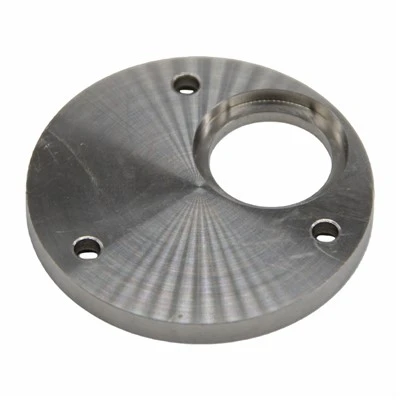
First, let’s skip the textbook definition for a sec. Think of DMLS like a super precise, metal-loving glue gun that builds parts layer by layer—but instead of glue, it uses a high-power laser, and instead of a plastic filament spool, it’s using fine metal powder. Let’s get into the grit of how it works, because that’s where the magic (and the confusion) lives. When we run a DMLS machine, the first thing we do is spread a thin, uniform layer of metal powder—usually stuff like stainless steel, titanium, aluminum, or even Inconel for those high-heat parts. This layer is only like 20 to 60 microns thick, so thin you can barely see it with the naked eye. Then, a computer (y’know, the one loaded with your 3D model, sliced up into those tiny layers) tells a fiber laser exactly where to zap. The laser heats that specific spot of powder until the metal particles melt and fuse together into a solid, dense mass. Once that layer is done, the build plate lowers just a tiny bit, another layer of powder gets spread on top, and the whole process repeats—hundreds, even thousands of times, until your part is fully formed.
Wait, hold up—why “sintering” instead of just melting? That’s a question we get from new customers all the time. A lot of people mix DMLS up with another metal 3D print tech called selective laser melting (SLM), but the core difference here is the heat level. Sintering doesn’t fully melt the metal; it heats it up to just below its melting point, so the particles bond together without turning into a liquid pool. That sounds like a small thing, but it’s why DMLS is such a workhorse. It works with way more metal alloys than SLM can—some super tough, temperature-resistant metals that would warp or crack if you melted them all the way. And because it doesn’t reach full melting temps, the parts shrink way less during the build, so you don’t have to do as much post-print fixing to get dimensions right. For us as a supplier, that means we can deliver parts to customers faster with less machining needed, which is a huge win for their timeline and budget.
Let’s talk about the stuff DMLS is actually used for, because that’s way more interesting than the process itself. Back in the day, if you wanted a custom titanium hip implant, you had to machine it from a solid block of metal—wasteful, expensive, and limited to simple shapes. Now, with DMLS, we can print a hip implant with porous structures that let the patient’s bone grow right into it. That’s not a gimmick; those implants have way higher success rates than old-style ones, and DMLS is the only way to make that internal porous lattice without machining 10 different parts and gluing them together.
Then there’s aerospace. Ever heard of SpaceX’s SuperDraco thrusters? Those were made using DMLS. A single thruster part that used to take weeks to machine from a solid piece of Inconel (a super heat-resistant nickel alloy) can be printed in a few days, and it’s lighter, stronger, and has fewer leak points because there’s no welded joints. Same goes for race cars—Formula 1 teams use DMLS to make lightweight, custom parts that are way stiffer than anything they can mill. We even work with a small motorcycle company that prints custom exhaust manifolds for vintage bikes; each one is tailored to the exact frame and engine, and they fit way better than off-the-shelf parts.
But DMLS isn’t perfect, and we don’t pretend it is. Let’s be honest here: the machines are pricey—like, six figures, easy. The metal powder isn’t cheap either, and you have to handle it carefully; some alloys, like titanium, can be reactive if there’s oxygen in the build chamber, so we have to keep the whole build area stuffed with argon gas. That’s another thing that sets DMLS apart from plastic 3D printing—we can’t just let the machine run in a open garage. And post-processing? That’s a big part of the workflow. When your part comes out of the DMLS machine, it’s covered in loose powder, and it’s sitting on a big block of solid metal (the “support structure” we had to print along with the part to hold it steady while it builds). You have to cut the part off the build plate, blast it to remove leftover powder, machine any high-tolerance features, and sometimes polish or coat it for use. It’s not a “set it and forget it” process, but for the right part, the tradeoffs are totally worth it.
A lot of people ask us, “Should I use DMLS, or another metal 3D print tech?” That’s where we come in—we don’t push DMLS for every job. If you need a hundred identical small parts, injection molding is still cheaper. If you’re making a super complex custom part that would cost a fortune to machine, DMLS is probably your move. We’ve had customers come to us with a part design that they’ve been machining for 10 years, and after we tweak it a tiny bit to fit DMLS, they cut production time by 70% and part weight by 40%. That’s the kind of win we live for.
Wait, let’s clear up a common myth too: people think DMLS is just for low-volume, super high-end parts. Nope—we’ve been doing runs of 500 identical aluminum brackets for a robotics company, and it was way more cost-effective than machining each one, with zero tolerance issues. The key is designing for DMLS, not against it. Small changes, like adding tiny vents so powder can escape during the build, or making supports that are easy to remove, make a huge difference. That’s why we work with our customers early on, not just after they send us a CAD file. We’ll look at their design, point out what works for DMLS, and suggest tweaks so they don’t waste time or money trying to print something that’ll warp or crack mid-build.
Another thing that’s cool about DMLS is material flexibility. We run machines that handle everything from soft 316L stainless steel for food parts, to medical-grade titanium Ti6Al4V, to tool steels like H13 for mold inserts. That means if you need a food-safe part for a commercial oven, or a die that can handle thousands of molding cycles, DMLS can do it. And as a supplier, we’re always testing new materials—last quarter, we added a copper alloy that’s perfect for heat exchangers, which is a game-changer for electric vehicle batteries that need to stay cool.
Let’s circle back to how this ties to our role as a metal 3D printing supplier. We don’t just sell DMLS prints—we walk our customers through every step. First, we talk through their part specs, timeline, and budget to figure out if DMLS is the right call. Then, if it is, we help optimize their design, run a test build (sometimes a small sample, not the full part) to catch any issues, then do the full run, post-processing, and quality checks. We’re not one of those places that spits out a part and disappears—we’re here if they need a tweak, a reorder, or help with a new design down the line.
If you’re reading this, you’re probably either tired of wasting money on machined parts that don’t fit right, or you’re working on a project that’s too complex for traditional manufacturing. DMLS isn’t a magic fix for every problem, but it’s the best tool we have for a lot of the tricky, high-stakes parts out there. We’ve seen it change how small businesses build custom parts, how aerospace companies cut costs, how doctors get implants that help patients heal faster.
So, if you have a part that you think could benefit from metal 3D printing, or you just want to pick our brains about DMLS, don’t hesitate to reach out. We’re here to help you figure out the best way to get your parts built, no fluff, no jargon, just straight talk about what works and what doesn’t.
Polyurethane Casting References:
- Gibson, I., Rosen, D. W., & Stucker, B. (2015). Additive Manufacturing Technologies: 3D Printing, Rapid Prototyping, and Direct Digital Manufacturing. Springer.
- ASTM International. (2017). Standard Terminology for Additive Manufacturing Technologies (F2792-12e1).
- "Direct Metal Laser Sintering (DMLS): Process, Materials, and Applications." 3D Printing Industry, 2023.
- Parthasarathy, J., et al. (2014). "Powder Bed Fusion of Titanium Alloys: A Review." International Journal of Powder Metallurgy, vol. 50, no. 3, pp. 41-50.
Shenzhen Multi-Wins Precision Technology Co., Ltd.
As one of the most professional metal 3d printing manufacturers and suppliers in China, we have world-leading production equipment and strong manufacturing capabilities. Please feel free to buy customized metal 3d printing made in China here from our factory. Also, quotation is available.
Address: 1 Phase, Yi’an City Central Garden, Longfei Avenue, Longgang District, Shenzhen, GD, China. 518100
E-mail: info@multi-wins.com
WebSite: https://www.multi-wins.com/
