Hey everyone, I’m [Name], and I’ve been running a heat pipe heat sink supply operation for a minute now. Over the years, I’ve had so many customers hit me up with the same question: “Can a heat pipe heat sink actually overheat?” It’s such a common one, and honestly, it’s not just new clients who ask—even some folks with years in the game get mixed up on this. Let me break this down straight, no corporate jargon, no B.S. Heat Pipe Heat Sink
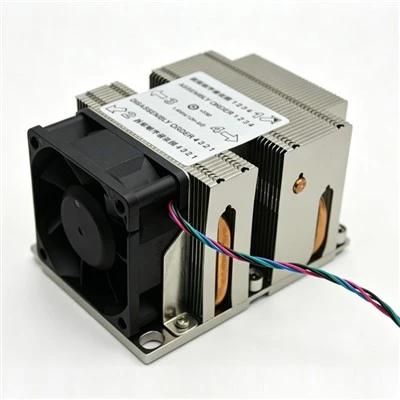
First, let’s get one thing out of the way: heat pipes are basically the MVP of passive cooling. They work on the simplest, most reliable thermodynamics trick in the book—evaporation and condensation. You’ve got a sealed copper (or sometimes aluminum) tube, a wick lining the inside, and a small amount of working fluid inside, usually water for most consumer and industrial applications. When heat hits one end (the evaporator, which you attach to your hot component—think a gaming CPU, server processor, or even an LED array), the fluid boils and turns to vapor. That vapor shoots over to the other end (the condenser, which is finned to dissipate heat), cools down, turns back to liquid, and the wick pulls it right back to the start. It’s a closed loop, no moving parts, and it transfers way more heat than a plain old aluminum fin ever could.
So why would something that works like that ever overheat? Let’s start with the myth: most people assume “if it’s a heat pipe, it can’t overheat.” That’s not true at all, and I’ve seen it happen more times than I’d like. The key here is that heat pipes only work within their operating limits. Push them past those, and suddenly they’re not cooling anymore—they’re becoming part of the problem.
Let’s talk about the main reasons a heat pipe heat sink will overheat. First, and this is the big one I see all the time: exceeding the heat pipe’s maximum heat transport capacity. Each heat pipe has a specific limit on how much heat it can move, usually measured in watts. If you cram more heat than that through it, the vapor can’t condense fast enough at the condenser end, and the whole thing gets backed up. No liquid is making it back to the evaporator, so the fluid there just keeps boiling dry. That’s called “dryout,” and once that happens, the heat sink is just a metal block with no way to move heat away from your component. I had a customer last year who put a 250W LED array on a heat pipe rated for 150W—they went from a working light that ran at a safe 45C to one that hit 120C in 10 minutes. Total overkill, and avoidable.
Next up: wick limitations, or what we call “capillary limit.” Remember that wick I mentioned earlier? Its job is to pull the condensed liquid back to the evaporator. If you’ve got a super high heat load, the vapor moves so fast that it pushes against that liquid, overpowering the wick’s ability to pull it back. That’s called “entrainment,” and it’s another way you end up with dryout. This is more common in smaller heat pipes, by the way. Tiny 3mm diameter pipes have smaller wicks, so they hit capillary limits way faster than 8mm or 10mm pipes. I always tell customers to size up their heat pipe if they’re working with higher heat loads—don’t skimp on pipe size to save a few bucks.
Another culprit here is condenser inefficiency. The whole point of the heat pipe is to move heat to the finned end, but if that finned end can’t dissipate the heat fast enough to the air around it, you’ve got a bottleneck. Think about it: if your heat pipe is moving heat to the condenser, but the fins are all crammed together so no air can flow through, or the ambient temperature is through the roof (like if you’re running equipment in a closed room with no AC, and it’s 38C outside), the condenser can’t cool the vapor down. That’s called “heat sink choking,” and it makes the entire unit overheat even if the heat pipes themselves are fine. I had a server client a while back who installed their racks in a hot closet, and even with our high-performance heat sinks, their CPUs kept overheating—once they moved the racks to a proper cool room, the temperatures dropped like a rock.
Wait, let’s not forget about working fluid issues. Most of our heat pipes use water, but sometimes people use other fluids for extreme cold or hot environments. If the fluid dries out or gets contaminated, that breaks the loop. For example, if a heat pipe gets damaged and develops a tiny leak, the working fluid slowly escapes. Once there’s not enough fluid to do the evaporation-condensation dance, it’s just a hollow metal tube. I’ve seen this happen with older heat sinks that got dropped or banged around during installation—small dents can crack the seal without you even noticing, and before you know it, the heat sink is useless.
Now, here’s the thing: a lot of the time when people think their heat pipe heat sink is overheating, it’s not the heat pipe itself, it’s a bad installation. If you don’t mount the heat pipe tight enough to your component—like skipping thermal paste, or not torquing the screws evenly—you’re creating a huge thermal gap. That gap acts like an insulator, so the heat can’t even get into the heat pipe in the first place. All that heat builds up on the component, and you blame the heat sink. I see this with gaming PC builders all the time—they rush the installation, skip the thermal paste, and then wonder why their CPU is throttling. Simple fix, but super common.
So, can a heat pipe heat sink overheat? Yeah, absolutely—but it’s usually not the heat pipe’s fault if it’s spec’d and installed right. That’s the biggest takeaway I want to get across here. A lot of customers think heat pipes are magic, but they’re just tools. You have to pick the right tool for the job, set it up correctly, and maintain it.
Let’s talk about how to avoid this, since that’s what most of you probably care about. First, size your heat pipes and heat sink properly. Don’t just grab whatever’s cheap—calculate your total heat load (watts) and make sure the heat pipe’s maximum transport capacity is at least 20-30% higher than that. That gives you a buffer for spikes, like if your LED array has a peak load, or your CPU hits a gaming boost. Also, go for larger diameter heat pipes if you have a high heat load—they handle more watts and have better capillary limits, so less chance of dryout.
Second, make sure the condenser is designed to dissipate heat. If it’s a passive unit (no fans), you need enough fin surface area and good airflow around it. If it’s an active unit (with a fan), get the fan size right—too small a fan won’t move enough air, too big is just wasting energy. Also, watch ambient temperature—if you’re running equipment in a space that gets hotter than 40C, you might need a heat sink with even more surface area, or go with a liquid-cooled heat pipe system.
Third, install it correctly. Use high-quality thermal paste (not the cheap stuff that dries out fast), apply it evenly in a thin layer, and torque the mounting screws to the manufacturer’s specs—usually 1-2 Nm for small components, a bit more for larger ones. Don’t over-tighten either, that can crack the component or the heat pipe seal. And handle the heat sink with care—don’t drop it, don’t bang it, because even a tiny dent can break that sealed loop.
Fourth, do regular maintenance if it’s in a harsh environment. For industrial equipment or outdoor LED displays, dust and dirt can build up on the fins over time, blocking airflow. Wipe down the fins every 6 months or so, or use compressed air to blow out the dust. If it’s a fan-cooled unit, check the fan every year to make sure it’s spinning properly, no bearings worn out.
I’ve been in this business long enough that I’ve fixed a lot of avoidable overheating issues. Last year, a customer from a local data center brought in a server that was crashing nonstop—their in-house team had replaced the CPU, tried different thermal paste, nothing worked. They called me, and I checked their heat pipes. Turns out they had 12mm heat pipes for a 500W CPU, but it was running at peak 650W, so they’d hit the dryout limit. We swapped them out for 16mm pipes, and their temps dropped from 95C to 62C, and they haven’t had a crash since. That’s the kind of fix I love—simple, right sizing, no fancy stuff.
Another time, a guy with a custom gaming PC came in complaining that his 3090 was throttling during games. He had a heat pipe heat sink he bought online, but when I looked at it, the heat pipes were arranged so half of them were buried under the GPU’s VRM chips, not attached to the hot spots. Bad layout, not the pipe’s fault. We redesigned the pipe layout to cover all the hot areas, and his max temp went from 88C to 72C. So placement and layout matter too, that’s part of the installation and design process.
So to circle back to the original question: yes, a heat pipe heat sink can overheat, but it’s almost never a flaw in the heat pipe technology itself. It’s usually a mismatch between the heat sink’s specs and your actual heat load, a bad installation, a clogged condenser, or a damaged heat pipe from rough handling. Heat pipes are super reliable when you use them right—they’re way more efficient than plain metal fins, and they last for years if taken care of.

If you’re in the market for a heat pipe heat sink and you’re worried about overheating, don’t just go for the cheapest option. Talk to someone who knows what they’re doing, like me, and give them all the details: what component you’re cooling, the total heat load (including any peak spikes), the ambient environment it’ll be running in, and if you need active cooling (fans) or passive. We can spec you exactly the right size, layout, and number of heat pipes to make sure your system runs cool, no overheating, no surprises.
Extrusion Heatsinks If you have any questions, or you need to talk through a project, hit me up to discuss your cooling needs. I’m here to help you get it right the first time, so you don’t end up with a overheating mess down the line.
References
- Faghri, A. Heat Pipe Science and Technology. Taylor & Francis, 1995.
- Bergman, T. L., et al. Introduction to Heat Transfer. Wiley, 2011.
- American Society of Heating, Refrigerating and Air-Conditioning Engineers (ASHRAE). Handbook of HVAC Applications, 2019.
- Dunn, P. D., Reay, D. A. Heat Pipes. Pergamon Press, 1982.
Dongguan Pioneer Thermal Technology Co., Ltd.
Dongguan Pioneer Thermal Technology Co., Ltd. is one of the most professional heat pipe heat sink manufacturers and suppliers in China. With abundant experience, we warmly welcome you to buy customized heat pipe heat sink made in China here from our factory. If you have any enquiry about quotation and free sample, please feel free to email us.
Address: Xiegang Village, Xiegang Town, Dongguan City, Guangdong Province, 523596, China
E-mail: vivian@ptheatsink.com
WebSite: https://www.coolingheatsink.com/
