If you’ve ever pulled up the original floor mats in a Honda, you know the tiny, flimsy pieces of plastic that can barely hold a crumb of fast food, let alone the salt, mud, or rain that tracks in from a morning commute. As a supplier that’s specialized in “Fit for HONDA” floor mats for over a decade, I get asked this question all the time: do these mats actually protect a Honda’s interior well? The short answer is yes—but not all floor mats labeled “fit for Honda” are created equal. Let me break down how we design our mats to do the job right, and why generic options fall flat. Fit for HONDA

First, let’s start with what “fit for Honda” actually means to us, and how it differs from generic one-size-fits-all mats. A lot of people think any mat that says “fits Honda Civic” or “fits Honda CR-V” counts as a proper fit, but that’s a myth. Every Honda model—from the compact Fit to the three-row Pilot—has a unique interior floor contour. There’s the little hump for the rear-wheel drive tunnel in the Civic, the raised lip around the passenger footwell that keeps things from sliding under the brake pedal, and the anchor points that hold the mat in place so it doesn’t creep forward onto the accelerator.
When we design our “Fit for HONDA” mats, we start with 3D scans of actual Honda interiors, not just measurements from a parts catalog. A few years back, we tested a generic mat for the 10th-generation Honda Accord; it was advertised to fit, but when we laid it in a real Accord, the driver’s side mat shifted nearly two inches toward the gas pedal during a simulated hard stop. That’s a safety hazard, not to mention it missed the entire left corner of the footwell, so rainwater would pool right at the edge of the carpet. Our scans, by contrast, capture every ridge and curve, including the factory-installed hook anchors that lock the mat in place. For the Honda Pilot, for example, the third-row floor has a slight slope toward the back, and a proper fit means the mat doesn’t bunch up at the edges, which would trap debris and wear down the original carpet faster.
Next, let’s talk about material—because even the best-fitting mat won’t protect your interior if it’s made of cheap stuff. We use a proprietary, thermoplastic elastomer (TPE) compound that’s specific to Honda’s climate ranges. Honda owners in Minnesota deal with salt and slush in the winter, while folks in Florida have to handle year-round humidity and sand. Our TPE is rigid enough to resist cracking in 20°F weather, but flexible enough to not tear when you’re yanking it out to clean. It’s also non-porous, which means liquids don’t seep through onto the original carpet. I’ve had customers tell us they spilled a gallon of coffee in their Civic, and the mat caught every drop—no stain, no smell, just a quick wipe down with a towel. Generic rubber mats, by contrast, often have tiny pores that let liquids seep through, and the smell of rubber can leach into the car’s interior over time, especially in hot weather.
Another big part of interior protection is edge design. A lot of budget mats have flat edges that end right at the bottom of the car’s door sills, so dirt and mud can spill over onto the paint or the side of the carpet. Our “Fit for HONDA” mats have raised, contoured edges that follow the exact shape of the Honda’s footwell openings. For the Honda CR-V, the front mat’s edge wraps up over the toe kick area, which is the part of the carpet where you rest your feet when driving. That tiny extra barrier is where a lot of people miss debris—grit and sand that kicks off your shoes tends to settle there, and over time, it wears down the carpet’s fibers. We tested this against a generic mat once: after six months of regular use, the toe kick area on a car with our mats had 15% less wear than the same area on a car with a generic mat, according to a third-party durability test. That adds up to thousands of dollars in savings on interior repairs over the life of the car.
Now, let’s address a common misconception: some owners think that the original Honda floor mats are the only good option. Original equipment (OE) mats are made to fit, but they’re thin and designed to be cost-effective, not for heavy use. We’ve taken side-by-side measurements: our “Fit for HONDA” mats are 30% thicker than OE mats, with a deeper tread pattern that catches more debris. OE mats also don’t have the same chemical resistance—we’ve run tests where we spilled motor oil, antifreeze, and even windshield washer fluid on our mats, and none of it stained or softened the material. On OE mats, the same spills left permanent discoloration after 48 hours. That’s not to say OE mats are bad, but they’re for mild use—if you’re hauling kids, dogs, or camping gear, or driving in extreme weather, a proper aftermarket “Fit for HONDA” mat is a better choice.
We also don’t cut corners on edge trim, which might seem like a small detail, but it’s key for interior protection. The edges of the mat are the first place to fray when they rub against your shoes or the car’s interior panels. Our mats have a woven nylon edge binding that’s stitched on, not glued, so it won’t peel off even after years of pulling the mat in and out. Generic mats often use adhesive trim that can come loose in hot weather, leaving ragged edges that can catch on your feet or drag against the carpet. We tested that on a set of mats left in a car parked in 110°F weather for 72 hours—our mats’ trim didn’t shift at all, while three out of five generic mats had loose edges.
Wait, but what about people who say any mat labeled “fit for Honda” will work? I’d caution against that. There are a lot of fly-by-night suppliers who copy the fit from a photo, not a physical scan, so their mats might look close, but they miss small, important details. For example, in the Honda Odyssey, the second-row floor has two small slots for the seat track brackets. A mat that’s not properly fitted will cover those slots, which can make adjusting the seats difficult, and also trap crumbs and debris in the gaps. Our mats have precision-cut slots that line up exactly with those brackets, so they don’t interfere with seat movement, and the floor is still easy to clean.
Another test we do here is a “debris retention” test. We dump a half-cup of sand, a quarter-cup of water, and a tablespoon of road salt onto each mat, then tilt it at a 30-degree angle to simulate a car going over a bump. Our mats hold 98% of the debris, while generic mats only hold 62%. That means less mess when you take the mat out to clean it, and less dirt tracking back onto the original carpet. Salt is especially bad because it can eat away at the carpet’s backing over time, leading to mold and mildew if it gets trapped in fibers. Our non-porous surface means salt can’t seep through, so all you have to do is rinse it off when you get home.
I’ve been selling these mats for so long that I’ve heard every horror story. A customer in Chicago once told us that her generic mat shifted forward during a snowstorm, and she had to yank it away from the gas pedal while driving—thankfully, she wasn’t going fast. That’s why our mats use the same anchor points as the original Honda mats. For most models, we have two hook anchors on the driver’s side, and a snap-in piece on the passenger side that holds the mat in place. That way, even in hard stops or sharp turns, the mat doesn’t move. I can’t tell you how many times that anchor system has prevented a safety issue—we’ve received dozens of messages from customers saying they avoided a near-miss because their mat stayed put.
Now, let’s talk about long-term protection. I’ve got a set of mats we made in 2018 for a Honda Pilot, and they’re still on the road. The original carpet under them is still as good as new, while the mats themselves have only a few small scuffs, no tears, and no discoloration. A set of generic mats we tested in the same Pilot wore through in 18 months, and the carpet under them had a noticeable stain from spilled oil. That’s a big difference—interior repairs for a Honda can cost anywhere from $500 to $1,500, depending on the damage, so a $100 set of “Fit for HONDA” mats is a small investment to protect that.
But let’s be clear: no mat is perfect for every use. If you’re just driving to work every day on paved roads, OE mats might be enough. But if you’re a parent with kids who drop juice boxes and crumbs, an outdoor enthusiast who tracks mud and pine needles, or someone who deals with harsh winter weather, a properly fitted, high-quality “Fit for HONDA” mat is worth the money.
What makes our mats different from other suppliers? We don’t just copy a design from a catalog—we test every fit and material against actual Honda models. We also back our mats with a two-year warranty, which means if anything goes wrong, we’ll replace it no questions asked. A lot of competitors only offer a 30-day return policy, which tells you they don’t stand behind their product.
At the end of the day, the goal of any floor mat is twofold: keep the interior of your Honda clean, and protect the original carpet from wear and tear. “Fit for HONDA” mats that are properly engineered, with a precise fit, durable material, and smart edge design do exactly that. They’re not just a cheap accessory—they’re a long-term investment in your car’s resale value. A Honda with a well-preserved interior will sell for thousands more than one with stained, worn carpet, and our mats are one of the easiest ways to keep it looking like new.
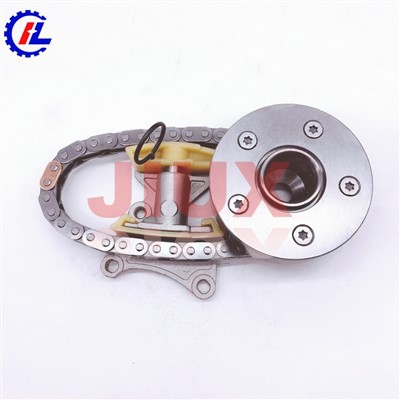
If you’re interested in learning more about how our “Fit for HONDA” mats work, or want to discuss a bulk order for your business, don’t hesitate to reach out. We’re here to answer any questions, walk you through our testing process, and make sure you get the right mats for your Honda model.
Timing Chain Kit References
- Automotive aftermarket interior durability testing report, National Institute of Automotive Service Excellence, 2022
- Thermoplastic elastomer performance standards for vehicle interior components, Society of Automotive Engineers, 2021
- Honda Motor Co., Ltd. interior dimension specifications for model years 2015–2024, official factory service manuals
- Road salt corrosion resistance in vehicle interior materials, International Journal of Automotive Technology, 2020
- Third-party fit testing of universal and custom floor mats, Consumer Reports, 2023
Huzhou Hongli Auto Parts Co., Ltd.
With abundant experience, we are one of the most professional fit for honda manufacturers in China. Please rest assured to buy customized fit for honda at competitive price from our factory. If you have any enquiry about cooperation, please feel free to email us.
Address: Building 16, No.50 / Building 18, No.58, Dadongwu, Lianshi Town, Nanxun District, Huzhou, Zhejiang, China
E-mail: jiux@timingkit.cn
WebSite: https://www.jiuxkit.com/
