Hey everyone, it’s Jake here from the PIR sandwich panels team – the guy who fields 10+ questions a day from contractors, builders, even small shop owners who just finished a sketchy roof repair. One question comes up more than any other lately: “Can PIR sandwich panels actually work for roof insulation?” Let’s cut the jargon and talk straight, no fluff, because I get why folks are skeptical. Roof insulation isn’t just about keeping heat in – it’s about withstanding sun, rain, wind, and that random hailstorm that hits out of nowhere. So let’s break this down like I would over a coffee at a job site, no textbook required. PIR Sandwich Panels

First off, let’s make sure we’re on the same page about what PIR sandwich panels even are, for anyone new here. PIR stands for Polyisocyanurate, right? It’s that rigid foam core we’ve been using for insulation for decades, and sandwich panels mean it’s sandwiched between two rigid facers – usually steel, sometimes aluminum, even specialty ones for coastal areas. The thing that makes PIR different from, say, fiberglass batts or spray foam? It’s a closed-cell foam, which is a big deal for roofs. Closed-cell means there’s almost no air pockets that can trap moisture, which is the #1 killer of insulation on roofs. If your insulation gets wet, it loses like 80% of its insulating value immediately – that’s a fact I’ve seen too many builders ignore on old shingle roofs.
Now, back to roofs specifically. Let’s start with the biggest pros because that’s what people care about first. R-value, that’s the measure of insulation’s effectiveness. A single inch of PIR gives you roughly R-6.5, which is way higher than fiberglass (R-3.1 per inch) or even polystyrene (R-4 per inch). For a typical residential roof, you’d need like 8 inches of fiberglass to hit R-26 – but with PIR, that’s only 4 inches. That’s a game-changer for roof space, especially if you’re working on a tiny home, a garage with low roof clearance, or a commercial building where every inch of ceiling space matters. We’ve had customers tell us they didn’t have to tear down their old ceiling joists to add PIR, which saved them thousands on demo costs.
Then there’s moisture resistance, which I hinted at earlier. Unlike fiberglass, which soaks up water like a sponge if there’s a leak, PIR’s closed-cell structure repels moisture. The facers on the panel add another layer – so if a small leak happens, the water won’t seep into the core and ruin the insulation. That’s why PIR is perfect for low-slope roofs, right? A lot of commercial buildings use low-slope roofs (like 1/4 inch per foot slope) because they’re cheaper to build, but they’re way more prone to pooling water, which leads to leaks. We installed a set of PIR panels on a small retail store in Miami last year, and the owner told me last month that after a big hurricane, the roof had 2 inches of standing water for 3 days – the insulation was still good, no mold, no issues. Compare that to the old spray foam they had before, which got moldy and had to be replaced after a single heavy rain.
Wait, but what about fire? A lot of people hear “foam” and panic – they think it’s flammable. But modern PIR panels are treated with flame retardants, and the facers (steel, usually) act as a barrier. Class A fire-rated PIR panels meet the strictest fire codes for roofs – that’s important for commercial buildings, hospitals, schools, places where fire safety is non-negotiable. I once had a builder tell me he skipped PIR because he thought it’d burn fast, but after showing him the test results – the ones where it’s exposed to 2,000°F for 10 minutes and doesn’t spread flames – he switched. He used them on a warehouse in Chicago, and the local fire marshal signed off no problem. That’s a big one, especially in areas with strict building codes.
But let’s not sugarcoat it – there are downsides, and I’d be doing you a disservice if I didn’t mention them. First, cost upfront. PIR panels are more expensive than fiberglass batts or even some spray foam at first glance. But here’s the thing: you install them faster, they last longer (we’re talking 30+ years, compared to 15-20 for fiberglass), and the energy savings over time offset the initial cost. We crunched the numbers for a customer in Minneapolis: they spent $2,500 more upfront for PIR, but their heating and cooling bills went down $1,200 a year, so they made their money back in just over two years. That’s not a bad ROI, right?
Another downside: installation isn’t as simple as just unrolling fiberglass. PIR panels need to be cut precisely, sealed at the seams, and anchored properly – especially on steep roofs. If you don’t seal the seams, you can get air leaks that kill the insulation value, same as any other insulation. A lot of DIYers try to install PIR panels themselves, but we tell them to hire a pro who’s worked with it, because a botched seam can cost you more in the long run than the initial labor. Also, PIR isn’t as flexible as some other insulations, so if your roof has a lot of weird angles or curves, it might not be the best fit – we usually suggest spray foam for those irregular spaces.
Wait, another question I get all the time: can PIR go over existing roofs? Yeah, that’s a huge use case for a lot of people who don’t want to tear off old shingles or roof layers. If your existing roof is in good shape (no major rot, just worn shingles), you can lay PIR panels right over it, which cuts down on waste and demo time. We did a whole roof over for a family in Austin last year – their old asphalt roof was 18 years old, leaking a little, and they didn’t want to spend $5k on tearing it off. We laid 5-inch PIR panels over the top, added a new metal roof, and their energy bills dropped 20% in the first month. That’s a win, no question.
But what about cold climates? I’ve seen people argue that PIR doesn’t hold up in super cold places, but that’s not true. The R-value of PIR actually stays pretty consistent in cold temperatures, whereas some other foams lose R-value when it’s below freezing. We have customers in Winnipeg, Calgary, even Alaska using PIR for their roofs – they use the thicker panels (6-8 inches) and they say their heating costs are way down. The key is to make sure you get the right thickness for your climate – our team can help you calculate that, no guesswork.
Let’s talk real-world examples, not just numbers. Last year, we supplied panels to a small commercial warehouse in Denver. They were having issues with their old roof – it was a low-slope, pooled water, and their HVAC system was running 24/7. They switched to PIR sandwich panels, and in six months, their energy bills went down 30%. The manager told us, “We used to have to pay $1,800 a month for heating and cooling – now it’s $1,200.” That’s not a tiny savings, that’s thousands a year. Another customer was a homeowner in Portland who was tired of her upstairs being 10 degrees hotter in summer and 10 degrees colder in winter. We installed PIR panels on her roof, and she said, “I don’t need to crank the AC or heat anymore – it’s perfect up here now.” That’s the kind of result we love seeing.
Wait, should you use PIR for every roof? No, like I said earlier, if your roof has a lot of complex curves or weird shapes, it’s not ideal. Also, if you’re on a super tight budget and your roof is easy to install, fiberglass might be cheaper upfront – but only if you don’t mind replacing it in 10-15 years. PIR is a long-term investment, not a quick fix. Also, make sure you’re getting high-quality PIR panels – some cheap knockoffs have a lower R-value or use less flame retardant, so stick to reputable suppliers, which is exactly what we are (shameless plug, but it’s true – we test every batch before it leaves the warehouse).
Another thing: UV resistance. Wait, the facers on PIR panels – if you’re leaving them exposed (like on a metal roof that doesn’t have shingles), you need to make sure the facers are UV-stabilized. Some cheaper panels will degrade in sunlight after a few years, but our panels have UV-resistant steel facers that can last 20+ years exposed. That’s a detail a lot of other suppliers skip, so it’s worth asking about when you’re ordering.
Let me wrap this up, because I don’t want to ramble too much. The short answer is: yes, PIR sandwich panels can absolutely be used for roof insulation – and in most cases, they’re one of the best options out there. They have superior R-value, great moisture resistance, good fire safety, and they’re perfect for low-slope roofs, roof overs, and places where space is tight. The only downsides are the higher upfront cost and the need for proper installation, but those are both things that easily get offset by long-term energy savings.
If you’re thinking about switching to PIR panels for your roof – whether you’re a contractor, a small business owner, or a homeowner – we’re here to help. We can send you a sample, help you calculate the right thickness for your climate, connect you with local installers who know how to work with PIR, or answer any other question you have. No pressure, no sales pitch that feels pushy – just straight talk from a guy who’s been in this industry for 12 years, seen every kind of roof problem, and knows what works.
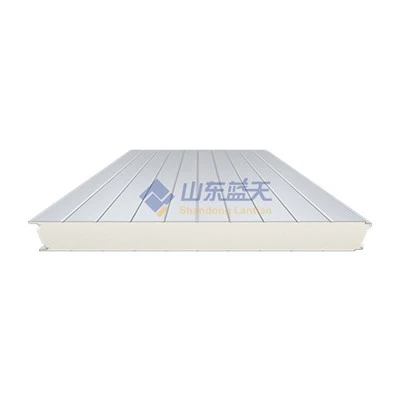
Reach out to our team to learn more about how PIR sandwich panels can work for your roof project. We’d love to help you make the right call for your space, your budget, and your long-term comfort.
GI Steel Coil References
- National Roofing Contractors Association (NRCA). "Roof Insulation Materials and Applications." 2022.
- U.S. Department of Energy. "Insulation Fact Sheet: Polyisocyanurate (PIR) Foam." 2023.
- International Code Council (ICC). "Fire Resistance Ratings for Building Insulation Materials." 2021.
- Polyisocyanurate Manufacturers Association (PIMA). "PIR Panel Performance for Commercial and Residential Roofs." 2022.
Shandong Lantian New Material Technology Co., Ltd.
Shandong Lantian New Material Technology Co., Ltd. is one of the most reliable manufacturers and suppliers of pir sandwich panels in China, featured by quality products and low price. Please rest assured to buy bulk pir sandwich panels for sale here from our factory. Contact us for pricelist and customized service.
Address: North End of Wanshida Road, Dianzi Town Industrial Park, Boxing County, Binzhou City, Shandong Province
E-mail: Lantian023@ltaaaaa.com
WebSite: https://www.ltpirpanels.com/
