If you’ve worked in commercial and industrial (C&I) energy storage for more than a few years, you quickly learn that a system’s performance isn’t just about picking the right batteries or inverters. I’m on the ground every day talking to manufacturing plant managers, grocery chain operations directors, and hotel energy teams, and one theme comes up again and again: bad monitoring is the number one reason even well-designed storage projects underperform or fail to deliver on their promised savings. When I speak to these teams, I don’t lead with specs or warranty terms. I lead with the monitoring gaps I’ve seen sink projects that looked perfect on paper. That’s why today, I want to break down exactly what the monitoring requirements are for C&I energy storage—from the battery cells deep inside the rack to the utility tariff they’re programmed to follow. This isn’t just a list of tech boxes; it’s the stuff that keeps your project running when the grid dips, when demand charges spike, or when a battery starts to degrade slower than expected. C&I Energy Storage
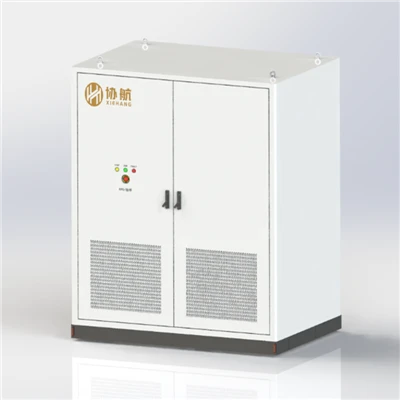
First, let’s start with the core of the system: the battery energy storage system (BESS) itself. For C&I projects, which are typically smaller than utility-scale ones—most are between 500 kWh and 5 MWh—every cell and every module matters. One dead lithium-ion cell in a string doesn’t just underperform that module; it can throw off the entire string’s charge and discharge rates, leading to uneven degradation that cuts your battery’s lifespan by years. That’s why basic monitoring for C&I BESS can’t stop at just tracking the total state of charge (SoC). We need module-level state of health (SoH), cell temperature per module, and individual cell voltage readings. I’ve had a client in the food processing industry skip module-level monitoring on a 2 MWh lithium-iron-phosphate (LFP) system we installed three years ago. Last year, when their inverter threw an alarm saying SoC was at 80%, their energy team went to check and found a 12V module that had dropped to 6V because of a failed BMS (battery management system) sensor. By the time they fixed it, that module’s SoH was down to 72%—a full 15% lower than the rest of the bank. If we’d had real-time, module-level alerts, we would’ve caught that within a week, not three months later. Temperature is another non-negotiable. C&I sites often have limited space for BESS racks, so teams tuck them in utility closets or on concrete slabs in the back of the building. Poor ventilation means hot spots can develop in racks, especially in summer when HVAC systems run constantly. Our monitoring tools track cell temps, and if a module hits 45°C (113°F), it sends a priority alert to the site manager. That’s not overkill—high temps accelerate LFP degradation by roughly 2x, per data from the Department of Energy’s Sandia National Labs. We can’t afford to miss that.
Next, there’s the inverter and power conversion system (PCS) monitoring, which is the bridge between the battery, the building’s load, and the utility grid. For C&I projects, the PCS doesn’t just convert DC power from the battery to AC for the site—it also has to execute peak shaving, demand response, and time-of-use (TOU) arbitrage strategies. If the PCS isn’t operating at peak efficiency, you’re losing money every month. I’ve seen a client in the retail sector with a 1.2 MWh system where the PCS was operating at 92% efficiency instead of the rated 96% because of a minor firmware bug. Over two years, that gap cost them roughly $18,000 in missed savings on their demand charges alone. So what do we need to monitor here? First, real-time AC and DC power output, because even small discrepancies between the two can signal a problem with the inverter or a loose connection. We also need to track grid compliance parameters: voltage, frequency, and power factor. C&I sites are often located in older areas where grid stability is weaker, and utilities have strict limits on how much a BESS can inject or draw from the grid without causing issues. If your PCS drifts out of compliance, you could face fines, or the utility could restrict your system’s output when you need it most. Finally, we need granular data on the PCS’s switching events—like when it switches from grid-tied to island mode, or when it triggers a demand response event. That data is critical for troubleshooting if the system doesn’t perform as expected during a grid outage, which is a big selling point for many C&I projects looking for backup power for critical loads like refrigeration or conveyor systems.
Then there’s the site load and tariff integration, which is where C&I energy storage delivers its real value. Unlike utility-scale storage, which is mostly optimized for grid services, C&I storage is tailored to a specific site’s energy use pattern. A grocery store will have peak loads in the evening when refrigerators and lighting run; a manufacturing plant will have peaks during shift changes; a school will have peaks during the day when classes are in session. To make sure the BESS is discharging when it matters most, monitoring can’t just live in the BESS or PCS—it has to integrate with the site’s building management system (BMS) and utility tariff data. I had a textile manufacturer client a year ago that was programming their peak shaving strategy manually, based on old utility demand charge timelines. Their BESS would discharge 30 minutes early, when the load was still low, and then the site would hit a secondary peak an hour later, adding $22,000 in demand charges over six months. Once we tied our monitoring tool directly to their utility’s real-time tariff API, the system adjusted its discharge schedule to the exact window of their demand peaks, and those charges dropped by 40% that year. That’s why monitoring can’t be a siloed tool. It needs to pull in site load data from the BMS, utility tariff data, and even weather data if the site has solar panels, to optimize for self-consumption of on-site generation. I’ve talked to a lot of small C&I operators who think their monitoring just needs to show SoC and power output, but that’s like buying a race car and only checking the gas gauge—you’re missing all the data that makes it go fast and stay on the track.
Another often-overlooked requirement is long-term performance tracking and failure prediction. C&I projects have a 10 to 15-year lifespan, so a one-time setup of monitoring isn’t enough. You need to track trends over months and years to catch degradation before it becomes a problem. For example, LFP batteries typically degrade at a rate of 2 to 3% per year when operated within their optimal SoC window, but if they’re regularly charged to 100% or discharged below 10%, that rate can jump to 5% or more. Our monitoring tools track daily SoC averages and discharge depths, so we can flag if a site’s operator is running the system outside of optimal parameters. Last quarter, we noticed a client in the food and beverage industry whose battery was being discharged to 15% every night, instead of the recommended 20%. Over 18 months, that would’ve added up to a 7% loss in SoH, and we caught it by looking at long-term trend data instead of just real-time numbers. We adjusted their charge schedule, and now their degradation rate is back to normal. We also use that data for predictive maintenance. If we see a PCS is drawing 5% more power to operate than it did six months ago, that can signal a filter needs to be replaced, or a connection is getting loose. For C&I teams, who don’t have a dedicated energy engineer on staff, that predictive data means less downtime and lower maintenance costs.
Now, let’s talk about accessibility and alerting, which make or break whether a monitoring tool is actually useful. A great monitoring system is useless if the person responsible for it can’t access it, or if alerts get lost in a sea of noise. I’ve seen projects where the monitoring dashboard is only accessible on a desktop computer in the main office, and the site manager is on the road for three days a week. When a cell temperature alarm goes off, no one sees it until they get back to the office, and by then, the cell is damaged. That’s why we build our monitoring tools with mobile-first dashboards, optimized for phones and tablets, so alerts pop up as text messages, push notifications, and emails to the site manager, the maintenance team, and our own service team. We also use smart alerting, not just alarm triggers. We don’t send a critical alert for every minor voltage fluctuation—we only send alerts for events that impact performance or safety. For example, a 0.5V cell voltage drop is normal, but a 2V drop over 24 hours is a problem, and that’s what we alert on. We also give clients customizable alert thresholds, so a grocery store can set different thresholds for temperature than a manufacturing plant that has more ventilation.
Security is another non-negotiable monitoring requirement, and it’s something that a lot of C&I operators don’t think about until it’s too late. BESS systems are connected to the internet, which makes them targets for cyberattacks. I’ve worked with utility companies that have had their grid-tied storage systems hacked, and the last thing a small C&I business needs is their storage system disabled by a ransomware attack. That’s why our monitoring tools use end-to-end encryption, regular security updates, and role-based access controls. Only the site’s energy team can adjust the system’s settings, and our team can only view data, not make changes, unless explicitly granted permission. We also run regular security audits of all our systems, and we make sure clients’ monitoring tools are compliant with NERC CIP standards for bulk power systems, even for smaller C&I projects.
Let’s wrap this up with what this all means for you as a C&I operator. Good monitoring isn’t an add-on to your energy storage project—it’s part of the core value. It’s what turns a $50,000 battery investment into a $100,000 savings over the life of the system. It’s what gives you peace of mind during a grid outage, knowing your backup power is working as promised. It’s what catches small problems before they become expensive failures.
If you’re evaluating a C&I energy storage project, don’t just ask about the battery’s capacity or the inverter’s efficiency. Ask about what monitoring is included, and make sure it hits all these points: module-level battery monitoring, granular inverter and PCS data, integration with your site load and utility tariffs, long-term trend tracking, mobile access with smart alerts, and robust security. If you have an existing system that’s underperforming, the first thing I’d suggest is checking your monitoring setup—more often than not, the problem is that you’re missing critical data, not that your system itself is broken.
I’ve spent the last decade building energy storage systems for C&I operators, and I’ve seen firsthand how the right monitoring can make a good project great. If you’re ready to talk about optimizing your existing system or designing a new C&I energy storage project with solid monitoring built in, reach out to our team to start a conversation about your specific needs. We’ll walk you through what works for your site, no generic specs or sales pitches—just real solutions that save you money and keep your operations running.
Portable Power Station References
Sandia National Laboratories. (2022). Lithium-Ion Battery Degradation in Commercial and Industrial Energy Storage Systems. U.S. Department of Energy.
North American Electric Reliability Corporation (NERC). (2023). Cybersecurity Standards for Bulk Power Systems, Version 6.
U.S. Energy Information Administration (EIA). (2024). Commercial and Industrial Energy Storage: Performance and Savings Analysis.
Zhejiang Xiehang New Energy Equipment Co., Ltd.
As one of the most professional c&i energy storage manufacturers and suppliers in China, our products have good reputation in the market. Please erst assured to wholesale custom made c&i energy storage from our factory. If you have any enquiry about cooperation, please feel free to email us.
Address: No.5 Hechen Road, Zhouwangmiao Town, Haining, Jiaxing City, Zhejiang Province, China
E-mail: dan.wu@xiehang.net
WebSite: https://www.shineonpower.com/
