If you’ve ever stood in front of an air-conditioned building on a sweltering summer day and felt the cool, dry air blowing out, you have a finned tube evaporator to thank. As a supplier that’s worked with HVAC contractors, building engineers, and industrial facility managers for over a decade, I’ve seen firsthand how this unassuming component turns hot, muggy air into comfortable, usable conditioned space—and why choosing the right finned tube evaporator makes all the difference in system efficiency, longevity, and performance. Finned Tube Evaporators
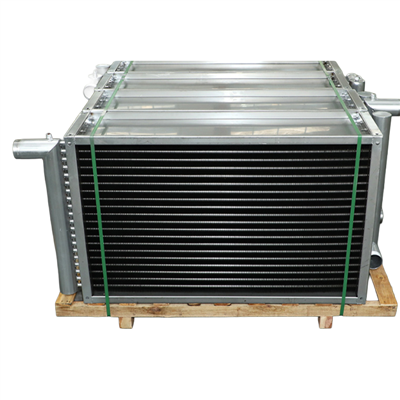
Let’s start with the basics for anyone who might not be deep in HVAC design: what an evaporator does in an AC system. The entire refrigeration cycle is a closed loop of heat transfer, where cool liquid refrigerant absorbs heat from the space being cooled, turns to gas, and then rejects that heat outside the building. The evaporator is the part of the loop where that first heat absorption happens. If it’s just a plain tube carrying cold refrigerant, though, it wouldn’t have enough surface area to pull heat from the surrounding air quickly enough to make an AC system practical for residential or commercial use. That’s where fins come in. Fins are thin, lightweight metal strips (usually aluminum, sometimes copper) attached perpendicularly to the exterior of the refrigerant tubes. They multiply the surface area available for heat exchange, making the process fast enough to cool a room in minutes rather than hours.
Now, let’s break down exactly how this works step by step, in the context of a typical rooftop or split-system air conditioner. First, liquid refrigerant, pumped at high pressure by the compressor and cooled by the condenser outside the building, reaches the evaporator at a relatively low temperature—usually between 35°F and 40°F, depending on the system’s design and the desired indoor temperature. When this cold liquid hits the tubes, heat from the warm indoor air blowing over the fins transfers through the fin metal and the tube wall into the refrigerant. That heat gain does two key things: it raises the temperature of the refrigerant, and it eventually causes the liquid to change phase into a low-pressure gas (the compressor will compress this gas back into a high-pressure liquid to restart the cycle).
Wait, you might be wondering: why do we use fins instead of just making the tubes thicker or longer? The answer is both practical and efficient. Thicker tubes add material cost and weight, while plain tubes have far less surface area. For a 30,000 BTU commercial AC unit, a plain tube might need to be 20 feet long just to absorb enough heat—but a finned tube evaporator can do the same job with a 4-foot tube, thanks to fins that add 5 to 10 times more heat transfer surface area in the same footprint. That compact design fits better in tight AC chassis, reduces refrigerant charge (lowering operating costs and environmental impact), and cuts down on the amount of metal needed for the build.
But not all fins are created equal. Over the years, I’ve seen systems fail prematurely because contractors didn’t specify the right fin type for their environment. For example, smooth, flat fins work great in dry, low-dust climates like the Southwest U.S., but in coastal areas with high salt content or industrial zones with airborne particulates, louvered fins are a game-changer. Louvered fins have small, angled slits that disrupt the boundary layer of air that forms around flat surfaces—this thin, static layer acts as an insulator, slowing heat transfer. The slits force air to mix, increasing contact between the air and the fin surface, which boosts efficiency by up to 15% in dirty or humid environments. We also offer hydrophilic coated fins, which prevent water from beading up on the surface (that beading is called “fouling”)—beaded water blocks airflow across the fins, forcing the AC to work harder to maintain the same cool temperature. That coating reduces drag, improves condensate drainage, and cuts annual energy costs by 10% or more for most commercial systems.
Another critical factor is fin spacing, or the gap between adjacent fins. Too wide a gap, and you don’t get enough surface area; too narrow, and airflow is restricted. For standard comfort AC systems, the sweet spot is 1.5mm to 2.5mm of fin spacing. But in high-humidity climates like the Southeast, we often recommend slightly wider spacing (2.5mm to 3mm) to let condensate drain freely instead of pooling between fins, which can lead to mold growth or corrosion over time. In low-humidity, high-capacity industrial cooling systems, tighter spacing (1mm to 1.5mm) lets us cram more surface area into the same space, making the unit more compact without sacrificing cooling power.
Now, let’s talk about how finned tube evaporators integrate into a full AC system, because their performance doesn’t exist in a vacuum. The evaporator is paired with a blower that pulls indoor air across the fins and tubes—if the blower is undersized, airflow is too low, and the refrigerant might not absorb enough heat, leading to inefficient cooling and even frost buildup on the evaporator coils. If the blower is too large, air moves too fast, and it doesn’t have time to transfer heat to the refrigerant, resulting in higher humidity in the cooled space (nobody wants a 75°F room that feels like a sauna). That’s why we work closely with contractors to match our finned tube evaporators to blower and compressor specs for each application—one size never fits all.
We also work with clients on custom configurations for specialized systems. For cold storage warehouses, which run at 20°F to 40°F, we use copper tubes (instead of aluminum) because copper is more resistant to corrosion from ammonia-based refrigerants common in industrial cold chains, and we space fins farther apart to prevent ice buildup from blocking airflow. For data centers, which need precise, consistent cooling to prevent server overheating, we design evaporators with enhanced fin geometries that maximize heat transfer without the risk of condensate, since data center humidity is tightly controlled.
Over the years, I’ve heard a lot of myths about finned tube evaporators, and one of the most common is that “all coils are the same.” I can’t tell you how many times we’ve replaced a cheap, generic evaporator coil that failed after two years, only to put in a properly engineered finned tube evaporator that’s still running strong after a decade. The difference is in the details: the quality of the tube-bonding process. When fins are attached to tubes, the bond between the fin and the tube has to be airtight and thermal-conductive, otherwise heat gets trapped at the interface, reducing efficiency. Many low-cost suppliers use adhesive to attach fins, which can degrade over time in high heat or humidity, leading to loose fins and poor performance. We use mechanical expansion of the tubes to “grow” them tight against the fins, creating a permanent, metal-to-metal bond that stays intact for the life of the system, even in harsh operating conditions.
Another myth is that regular cleaning isn’t necessary for finned tube evaporators. While modern coatings reduce fouling, dust, pollen, and mold will still build up on fins over time. That’s why we share a simple maintenance tip with all our clients: every 6 to 12 months, depending on the environment, use a soft brush or low-pressure air to gently clear debris from the fins. Avoid high-pressure water, which can bend the fins and block airflow—bent fins act like a wall for air, cutting cooling performance by up to 25% in severe cases.
Now, you might be wondering: when is the right time to upgrade or replace your finned tube evaporator? If your AC unit has higher monthly energy bills than it used to, or if it’s blowing warm air even when the thermostat is set low, the evaporator is often the culprit. Old, fouled, or poorly matched coils force the compressor to work overtime, which not only raises costs but shortens the entire system’s lifespan. As a supplier, we prioritize not just selling coils, but helping clients find the right solution to fit their needs, whether that’s a standard off-the-shelf unit for a small retail space or a custom engineered coil for a large hospital or manufacturing plant.
If you’re a building engineer, HVAC contractor, or facility manager looking to upgrade your AC system’s performance, reduce energy costs, or replace a worn-out finned tube evaporator, we’re here to help. We work with all types of systems, from residential split units to industrial cold storage and commercial rooftop units, and we offer free site assessments to help you pick the right fin design, tube material, and size for your specific environment. Whether you need a single replacement coil or a full order for a multi-building project, we provide reliable, long-lasting components that keep your spaces cool and efficient year-round.
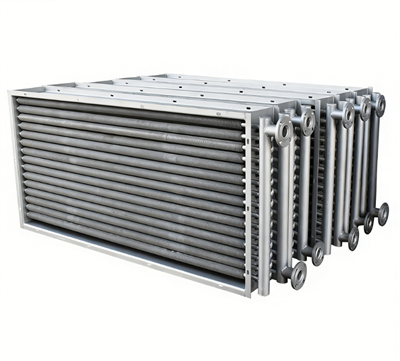
Don’t let an underperforming evaporator hold back your AC system. Reach out to us today to discuss your finned tube evaporator needs and find a solution that works for your budget and performance goals.
Finned Tube References:
- ASHRAE Handbook—HVAC Systems and Equipment, American Society of Heating, Refrigerating and Air-Conditioning Engineers, 2021
- “Finned Tube Heat Exchangers: Design and Application Guidelines,” Heat Transfer Engineering, Vol. 38, No. 12, 2017
- Air-Conditioning and Refrigeration Institute (ARI) Standard 410, for Finned Coil Performance Testing, 2019
- Coastal HVAC Corrosion Resistance Guide, National Air Duct Cleaners Association (NADCA), 2020
Xiangshui Derkang Refrigeration Equipment Co., Ltd.
Address: No. 2, Xiaojian Town Entrepreneurship Park, Xiangshui County
E-mail: 505745223@qq.com
WebSite: https://www.xsderk.com/
