As a packaging webbing supplier who’s spent the last 12 years testing, troubleshooting, and shipping webbing to industries ranging from agriculture to e-commerce warehousing, I’ve heard this question a hundred times from customers: “Why did the webbing that worked perfectly last winter snap this summer?” The answer almost always boils down to temperature— a variable most teams treat as an afterthought, not a core performance driver. Packaging Webbing
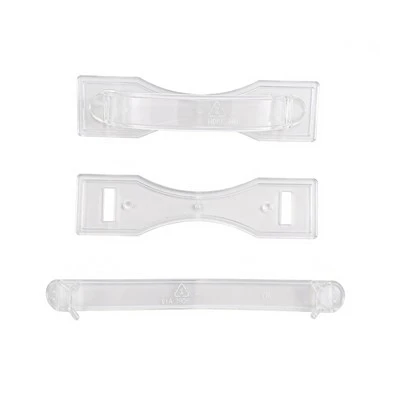
Packaging webbing isn’t just a strip of fabric or nylon; it’s a engineered load-bearing component designed to secure pallets, wrap cargo, and withstand repeated tension, abrasion, and extreme environments. Temperature shifts don’t just make the webbing feel stiffer or stretchier to the touch—they alter its molecular structure, strength, elasticity, and durability in ways that can turn a routine securement into a shipping disaster. Let’s break this down, from the lab data we collect daily to the real-world scenarios that keep our clients up at night.
First, let’s start with the basics: not all packaging webbing is made equal. Most webbing sold today falls into three core categories: polyester (PET), nylon (polyamide), and polypropylene (PP). Each has a distinct molecular makeup that reacts differently to temperature, which is why one-size-fits-all webbing almost always fails when conditions fluctuate. Polyester, for example, has tight, rigid polymer chains that resist elongation and are known for their high tensile strength—ideal for heavy-duty pallet securement. Nylon has looser, more flexible chains, which give it unmatched elasticity and impact resistance, making it the go-to for rugged agriculture or construction loads that shift during transport. Polypropylene is lightweight and low-cost, used mostly for light-duty e-commerce packaging, but it’s the most temperature-sensitive of the three.
Let’s start with low temperatures, because that’s where we see the most unexpected failures, especially in colder climate regions. We recently ran a series of tension tests on 1-inch wide polyester webbing, our most popular SKU for general industrial use, at temperatures ranging from -20°F to 100°F. At 70°F (room temperature, the baseline), the webbing broke at 1,800 pounds of tension—well above the 1,200-pound minimum required for pallet securement per industry standards. At 32°F (freezing), that strength dropped by 12% to 1,580 pounds. At -20°F, it plummeted by 28% to just 1,296 pounds, dangerously close to breaking under the weight of a standard 48×48 wooden pallet loaded with 2,000 pounds of goods.
Why does this happen? For crystalline polymers like polyester, low temperatures lock the tightly packed molecular chains into a rigid, brittle state. Normally, when webbing is placed under tension, the chains stretch and align, distributing the load evenly across the entire strip. When cold, those chains can’t move—they snap instead of stretch. That’s the “cold snap” failure our clients talk about, where a webbing that looked fine before wrapping shatters during transport. We’ve seen this firsthand last winter with a food distribution client in Minnesota: they ordered standard polyester webbing, wrapped their frozen meat pallets, and three loads out of 12 snapped on the highway, leading to $12,000 in lost inventory and delivery delays.
Nylon performs a bit better in cold temperatures, but it has its own quirk: while its elasticity is retained down to -40°F, prolonged exposure to cold can reduce its overall tensile strength by 15-20%, according to our tests. Polypropylene is the worst of the three in cold: at 32°F, its strength drops by 35%, and at -10°F, it becomes so brittle it can crack with a sharp tug, even at low tensions. That’s why we explicitly warn clients using polypropylene webbing for outdoor cold storage or winter shipping to upgrade to nylon or polyester instead, even if it costs a bit more.
Now, the other end of the spectrum: high temperatures. This is another common pain point, especially for clients shipping goods in desert regions, storage facilities with poor ventilation, or even containers stacked on tarmac in summer. Let’s go back to that same 1-inch polyester webbing, tested at 100°F. Its tensile strength was roughly the same as at room temperature—only a 3% drop, which is negligible. But here’s the part most people miss: while strength stays consistent, elasticity shifts dramatically. At 70°F, polyester has an elongation rate of 10-12% under tension—meaning it stretches just enough to absorb minor shifts in cargo without going slack. At 100°F, that elongation jumps to 16%—more than 50% higher. Over a long shipping route, that extra stretch adds up: a 100-foot length of webbing, stretched an extra 4% per 100 feet, can go from tight at loading to slack by the time it reaches its destination. That slack means the load can shift, tip, or even fall off the truck, leading to accidents.
Nylon, again, is more elastic, but high temperatures take a bigger toll on its strength. We tested nylon webbing at 120°F (common inside a shipping container parked in Arizona in July), and its tensile strength dropped by 22% compared to room temperature. At 140°F, it dropped by 35%—enough to cause a high-security pallet to snap during transport. Polypropylene, by contrast, is super elastic in heat, but its strength plummets so quickly that at 120°F, it’s only 40% as strong as it is at 70°F. We once had a client in Texas use polypropylene webbing for outdoor furniture shipments in July; 8 out of 20 pallets had webbing snap mid-shipment, damaging $8,000 worth of outdoor cushions.
But temperature doesn’t just affect raw strength and elasticity—when combined with other factors common in packaging, it creates compounding issues. For example, temperature and moisture combined: cold temperatures often bring snow, rain, or condensation, which adds moisture to webbing. Polyester and nylon absorb very little moisture (less than 1% of their weight), but polypropylene is hydrophobic, so it actually becomes stiffer when wet in cold, amplifying its brittleness. Another compound factor: UV exposure, which is worse at higher temperatures. Webbing exposed to sunlight at 100°F breaks down 3x faster than webbing stored in a cool, dark warehouse. At 120°F, UV rays break down the polymer chains twice as quickly as at 70°F, leading to fraying, weakening, and premature failure. We’ve seen webbing that should last 2 years fail in just 6 months when stored outdoors in a hot, sunny climate with no shade.
Another real-world scenario: temperature cycling. That’s when webbing is exposed to frequent swings between hot and cold—think a warehouse in a climate where daytime temps hit 95°F and nighttime drop to 40°F, or a shipment that travels from Florida to Canada in a single trip. This cyclic stress is far more damaging than constant cold or constant heat. Our lab tests show that 100 cycles between -20°F and 100°F reduce polyester webbing’s tensile strength by 18%—more than constant exposure to either temperature alone. Why? The repeated expansion and contraction of the polymer chains (when cold, chains shrink; when hot, they expand) creates micro-cracks in the webbing, which grow over time until the webbing fails. This is why we always recommend that clients exposed to frequent temperature swings use higher-temperature-rated webbing, and replace webbing every 6 months even if it looks intact.
Now, let’s talk about how we’ve translated all this data into solutions for our clients. As a supplier, we don’t just sell webbing—we test every SKU against temperature ranges and label each product clearly with its performance specs. For example, our “Cold Weather Heavy Duty Polyester Webbing” is rated for use down to -40°F, with a tensile strength of 1,700 pounds at -20°F—nearly 30% higher than standard polyester webbing. We modified the polymer formulation slightly to add a small amount of plasticizer that keeps the chains flexible in cold, without sacrificing strength in warm temperatures. For hot climates, we offer a UV-stabilized polyester webbing that resists degradation at 140°F, with only a 5% strength loss even after 1,000 hours of UV exposure.
We also work with clients to do temperature-matched load testing, which is a step most companies skip. Instead of testing webbing strength only at room temperature, we test it at the exact temperature it will be used in. For a client shipping frozen seafood from Alaska to Chicago, that means testing at 0°F to -20°F, not 70°F. We recently did this for a major grocery chain, and they switched to our cold-rated webbing, reducing pallet breakages by 92% in the first year. For a construction client shipping lumber in Arizona, we tested their webbing at 120°F, found standard nylon webbing was too weak, and recommended our heat-rated polyester webbing, which cut damage costs by $14,000 annually.
I want to emphasize one thing: this isn’t just about “buying the right webbing”—it’s about understanding how temperature interacts with your specific use case. A small e-commerce shipper in Florida, moving light packages in a climate-controlled warehouse, might get away with polypropylene webbing. A construction company moving heavy steel beams in Minnesota in winter will never get away with that. Too many suppliers treat webbing as a one-size-fits-all commodity, but that’s a mistake that costs clients thousands in damages and delays.
If you’re dealing with webbing failures that seem tied to temperature, or you’re not sure which webbing is right for your climate and use case, reach out. We don’t do generic sales pitches—we’ll send you a sample of our webbing, run quick temperature tests on your end, and help you find the solution that fits your needs, no matter the weather. Don’t wait for a pallet to snap and cause a shipment delay—let’s talk now.
Handle Buckles References
- ASTM D4964-19, Standard Test Method for Tension and Elongation of Flexible Webbing, American Society for Testing and Materials
- Polymer Technology Group. (2021). Temperature Effects on Polymeric Materials: A Review of Mechanical Performance. Journal of Industrial Polymers, 45(3), 189-207
- Packaging World. (2022). Temperature’s Hidden Impact on Pallet Securement Materials. Vol. 54, No. 8, 2022, 41-45
- National Association of Packaging, Handling, and Logistics Engineers (NAPHEL). (2023). Cold Weather Packaging Best Practices for Supply Chains
Tengzhou Fujin Plastic Products Co., Ltd.
As one of the most professional packaging webbing manufacturers and suppliers in China, we also support customized service. With abundant experience, we warmly welcome you to buy bulk packaging webbing made in China here and get pricelist from our factory. For price consultation, contact us.
Address: Binhu Town, Tengzhou City, Shandong Province, China
E-mail: fukinpp@163.com
WebSite: https://www.tzfujin.com/
