If you’re reading this, chances are you’re either a gearbox user who’s dealt with that annoying, sweat-inducing overheating issue mid-operation, or you’re like me—some guy who’s spent the last 8 years selling, troubleshooting, and tweaking parallel shaft gearboxes for industrial, mining, and agriculture clients. Let me cut to the chase: overheating is the number one reason our gearboxes end up needing premature repairs, and it’s almost never a “design flaw” or “bad manufacturing” thing. 9 times out of 10, it’s a preventable mess-up in installation, maintenance, or even how the gearbox is matched to your equipment. Parallel Shaft Gearboxes

I’ve seen it firsthand: a farmer ran a 50HP parallel shaft gearbox on a grain dryer without adding the right amount of grease, and it seized up in the middle of harvest, costing him 3 days of downtime and $12k in lost crops. A packaging plant switched to a custom gear ratio without adjusting their motor size, and the gearbox ran 20 degrees hotter than its design limit for 6 months before a bearing burned out. That’s the stuff that keeps us up at night, right? So let’s break down the actual, actionable measures we implement at our shop to stop overheating before it starts—no fancy jargon, just stuff that works.
First up: get the right gearbox for the load, no cutting corners here. I know, I know—you’ve got a tight budget, and the catalog says a smaller model will “fit” your motor’s rpm. But here’s the hard truth: parallel shaft gearboxes have a specific rated power for continuous operation, and if you run yours above that, heat builds fast. It’s called “overloading,” and it’s the top cause of excessive heat in our units.
Let’s put this in simple terms: a gearbox’ job is to take your motor’s fast, low-torque spin and turn it into slow, high-torque spin. If you ask it to handle more torque than it’s built for, the gears rub harder, the bearings work overtime, and all that friction turns into heat. We see this all the time with conveyor systems that get loaded up beyond their design capacity—like when a construction crew dumps twice as many bricks on a conveyor as planned, and the gearbox runs hot within an hour.
How to fix this? Do the math, and don’t guess. Calculate your required torque and speed, then check the gearbox’ “service factor” (that number next to the power rating in the spec sheet). For example, a gearbox with a 1.5 service factor can handle 50% more load than its rating, which is perfect for applications with sudden spikes (like mining conveyors, or farm equipment that hits a root while plowing). If you’re running a light, consistent load (like a packaging line that never changes its output), a 1.0 service factor is enough. But never go below that—we’ve had clients who tried to, and every single one came back with a overheated gearbox within 3 months. And for the love of all things industrial, if you’re modifying your equipment (like swapping a larger motor or a longer conveyor), come talk to us before you buy a new gearbox. We’ll run the numbers for free, no strings attached.
Next: lubrication. This is where most people mess up, and it’s a huge one. I can’t tell you how many times a client says, “I grease my gearbox once a year,” or “I used whatever grease was lying around the shop.” Wrong, wrong, wrong. Lubrication is the gearbox’ cooling system—without enough of the right stuff, metal-on-metal contact creates friction, which turns into heat, which breaks down the lubricant, which makes more heat, and so on until something fails.
First, pick the right lubricant. Parallel shaft gearboxes work in different temperatures, right? A unit running in a freezing warehouse needs different grease than one in a 120-degree industrial oven. For standard indoor applications, we use a synthetic gear oil with a viscosity grade of 220 or 320—way better than mineral oil, because it stands up to heat and doesn’t break down as fast. If you’re in extreme heat, go for a 460 viscosity; if it’s super cold, 150 works. And never mix grease and oil—some gearboxes are grease-lubricated, some are oil-bath, and mixing them turns into a gummy mess that doesn’t lubricate or cool properly.
Second, get the amount right. Too little, and the gears and bearings aren’t covered—they rub, get hot, and wear out fast. Too much, and the lubricant churns inside the gearbox, creating extra heat (it’s like stirring a pot too fast and making it boil over). We have a simple rule: for oil-bath gearboxes, fill it up to the middle of the lowest gear’s teeth. For grease-lubricated ones, pack the bearings and gear cavities about 30-40% full—if you can see excess grease oozing out of the vent plug when you install it, you’ve put too much.
Third, change it on schedule, not when you remember. How often? It depends on the application. For continuous heavy use (like mining conveyors running 24/7), change the oil every 6 months. For light use (like a small packaging machine running 8 hours a day), every 2 years. And if you notice the oil is cloudy, has metal shavings in it, or smells burnt, change it immediately—don’t wait for the scheduled time. We had a food processing client who ignored cloudy oil for a month, and their gearbox seized up, spilling metal shavings into their product. That cost them way more than an oil change would have.
Third measure: ventilation and cooling. Parallel shaft gearboxes trap heat inside their casings, right? If they’re in a tight, enclosed space (like a small electrical room, or a equipment cabinet with no airflow), that heat has nowhere to go, and temperatures skyrocket. We’ve seen gearboxes in server rooms reach 180 degrees F, just because there’s no way for hot air to escape.
What can you do? First, make sure your gearbox is installed where there’s at least 6 inches of clearance around it for airflow. If it’s in a cabinet, add a small fan to blow air over the gearbox’ casing, or install a heat sink (that’s a metal plate attached to the casing that pulls heat away). For extreme high-heat applications (like steel mills or glass plants), we even add external cooling jackets—water or air channels wrapped around the gearbox that carry away excess heat. And don’t forget the vent plug! A lot of people leave the vent plug tight, so air can’t circulate, which builds up pressure and traps heat. Make sure the vent plug is open (or has a filter to keep dust out) so hot air can escape.
Wait, another thing: if your gearbox is outdoors, in direct sunlight, the sun is adding extra heat to it. We have clients in Texas who run their gearboxes under a tarp to block sunlight, or paint the casing with reflective paint—simple, cheap fixes that bring temperatures down by 10-15 degrees.
Fourth: proper installation and alignment. This is a big one, and it’s something most people overlook. If your gearbox isn’t aligned perfectly with the motor or the equipment it’s connected to, the shafts twist, the gears don’t mesh right, and you get extra friction and heat. I’ve seen misalignment cause a gearbox to run 25 degrees hotter than normal in a week—no other issues, just bad alignment.
How to check alignment? Use a dial indicator, or even a straight edge and a feeler gauge (if you’re not a pro, ask someone who is). For parallel shaft gearboxes, the two shafts (input and output) need to be perfectly in line—no angle between them, and no offset. If there’s even 0.005 inches of misalignment, that’s enough to cause excess heat. And when you’re mounting the gearbox, make sure the base is solid—no wobbly foundations, because that also causes misalignment. If your gearbox is mounted on a wooden or flimsy metal base, upgrade to a steel plate foundation—it’s a small cost that prevents a lot of heat-related issues.
Also, don’t over-tighten the mounting bolts. I know, you want the gearbox secure, but over-tightening can warp the casing, which misaligns the shafts and gears. Follow the torque specs in the installation manual—for most of our gearboxes, that’s 30-50 ft-lbs for M10 bolts, for example. No need to crank them until the bolt snaps.
Fifth: regular inspections and maintenance, not just when something breaks. This is the proactive stuff, and it’s way cheaper than fixing a seized gearbox. We recommend a monthly check for most applications, and a quarterly check for heavy use. What to look for?
First, check the temperature. Use a non-contact infrared thermometer (they’re $20 on Amazon, way easier than putting your hand on the hot casing) and take a reading when the gearbox has been running for 30 minutes (so it’s at operating temperature). The max safe temperature for our parallel shaft gearboxes is 180 degrees F (82 degrees C)—if it’s higher than that, you have a problem.
Second, check for leaks. If you see oil or grease leaking from the seals, that means you’re losing lubricant, which will cause overheating. Replace the seals as soon as you notice a leak—don’t wait for the lubricant to run out.
Third, check for vibration. If the gearbox is vibrating more than usual, that’s a sign of misalignment, worn bearings, or broken gears. Turn it off immediately, check the alignment, or call us to come look at it. Vibration also creates extra heat, so fixing it early prevents bigger issues.
And here’s a pro tip: keep a log of your gearbox’ temperature and maintenance. When you see a consistent spike in temperature, you can catch it before it turns into a breakdown. We have a mining client who keeps a log for 12 gearboxes, and they’ve caught 8 potential overheating issues in the last year just from checking the log.
Wait, let’s talk about common mistakes that people make that lead to overheating. One big one: running the gearbox at too high a speed. The input speed of our parallel shaft gearboxes is rated for a maximum (usually 1800 rpm for standard units). If you run a 1800 rpm gearbox at 2400 rpm, you’re not only making the gears spin faster, creating more friction, but also churning the lubricant too much, adding more heat. That’s a quick fix—adjust your motor’s speed with a VFD (variable frequency drive) if you need to run at different speeds, or make sure the gearbox’ input speed matches your motor’s output.
Another mistake: using the wrong type of gearbox for the application. Wait, parallel shaft gearboxes are great, but they’re not perfect. If you’re running a very high-speed, low-torque application, maybe a planetary gearbox is better? But no, our clients mostly use parallel shafts for heavy, high-torque work, so that’s not as common. But if you’re running a gearbox in a dusty environment, make sure the seals are good—dust can get inside, grind on the gears, create friction and heat. That’s where a good lip seal or a labyrinth seal comes in, so the dust stays out and the lubricant stays in.
Let me wrap this up with a real example that shows how all these measures work together. Last year, we had a client with a 10HP parallel shaft gearbox running a conveyor at a local warehouse. They were having constant overheating issues, and they’d changed the oil, tightened the bolts, checked the alignment, but it still ran at 190 degrees F. When we went to look at it, we found three things: they’d filled the oil to the top of the gear cavity (too much, so it was churning), the vent plug was clogged with dust (so heat couldn’t escape), and the conveyor was loaded with 20% more boxes than its rated capacity (overloading). We adjusted the oil level, cleaned the vent plug, and told them to cut the load to the rated amount. Three days later, they called us saying the gearbox was running at 155 degrees F—way below the safe limit. That’s all it took, no fancy repairs, just small adjustments.
At the end of the day, overheating is preventable if you take the right steps: match the gearbox to your load, use the right lubricant in the right amount, make sure it’s ventilated and aligned, and check it regularly. We design our parallel shaft gearboxes to handle tough conditions, but they need a little care to work at their best.
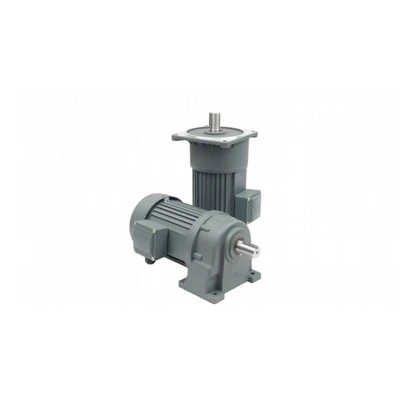
If you’re dealing with overheating in your parallel shaft gearboxes, or you need help picking the right gearbox for your application, feel free to reach out. We’ve helped hundreds of clients fix overheating issues, and we’re happy to run the numbers or give you advice—no sales pitch, just honest feedback. Whether you’re a small farm or a big industrial plant, we’ve got the gearboxes and the know-how to keep your equipment running cool, no downtime required.
RF Hypoid Gear Motor References:
- American Gear Manufacturers Association. (2020). AGMA Standard 6010-E19: Gearbox Lubrication and Heat Management.
- Heywood, J. B. (2015). Gearbox Overheating: Causes, Mitigation Strategies, and Best Practices. Industrial Lubrication and Tribology, 67(3), 289-297.
- OSHA. (2021). Industrial Machinery Heat Management Guidelines: Preventing Equipment Overheating and Operator Risks.
- Parallel Shaft Gearbox Manufacturers Association. (2019). Installation, Maintenance, and Troubleshooting Manual for Parallel Shaft Gear Drives.
GuangDong Ruisico Transmission Technology Co., Ltd.
Guangdong Ruisico Transmission Technology Co., Ltd. is one of the most reliable parallel shaft gearboxes manufacturers and suppliers in China, also supports customized service. Welcome to buy durable parallel shaft gearboxes made in China here and get quotation from our factory. For price consultation, contact us.
Address: No. 70, Anjing Road, Shengfeng Community, Xiaolan Town, Zhongshan City
E-mail: info@risc-drive.com
WebSite: https://www.risc-motor.com/
