If you’ve ever spent 20 minutes scrubbing a greasy set of wrenches after a weekend project, or stared at a caked-on, oil-crusted kitchen gadget that’s been in the back of your sink, you’ve probably wondered: can an ultrasonic cleaner actually cut through this gunk, or is it just another overhyped gadget that makes you click “add to cart” for nothing? As a supplier of ultrasonic cleaners—someone who’s talked to mechanics, line cooks, vintage car restorers, and small business owners about this exact question more times than I can count—I get it. When you’re dealing with tough grease, you want proof, not sales jargon. Let’s break this down, no fluff, based on the science, the tests we run on our own units, and the real-world stories of the people who rely on these machines every day. Ultrasonic Cleaner

First, let’s start with what ultrasonic cleaners actually do, because half the confusion about whether they work comes from not understanding their core function. If you’ve ever heard that high-pitched whine from one of these machines, you might think it’s just vibrating the liquid to scrub things, but there’s a lot more going on inside. At the heart of every ultrasonic cleaner is a set of transducers—small devices mounted to the bottom or sides of the tank that convert electrical energy into high-frequency sound waves, usually between 20 kHz and 40 kHz for the consumer and commercial units we sell. Those sound waves travel through the cleaning solution, creating millions of tiny, invisible vacuum bubbles in the liquid. When those bubbles hit a solid surface (like a wrench coated in axle grease, or a pot caked with bacon grease), they collapse almost instantly—with enough force to lift dirt, oil, and grease off that surface without ever touching it. That process is called cavitation, and it’s the magic that makes ultrasonic cleaners different from a rag and soap.
Now, let’s get to the main question: do these bubbles work on grease? The short answer is yes—but not all grease is the same, and not all ultrasonic cleaners are built the same way. Grease, in simplest terms, is a viscous, oily substance that’s designed to stick to surfaces. Think of the thin, runny motor oil that splatters on your driveway vs. the thick, heavy grease packed into a ball joint on a truck, or the greasy residue left on a cast iron skillet after frying a big batch of chicken. Ultrasonic cavitation works best on grease that’s not fully cured or baked on, but even baked-on grease can be broken down with the right setup.
Let’s talk about the science here, because it’s not just a vague claim. A 2019 study published in the Journal of Cleaner Production tested ultrasonic cleaning on metal parts coated in various types of industrial grease, comparing it to manual scrubbing and solvent-based cleaners. The researchers found that a 20-minute ultrasonic clean removed 98% of the grease from small, intricate metal parts—parts with crevices and holes that a rag and brush can never reach—while manual scrubbing only removed 72% of the grease, leaving behind thin layers that can cause part wear or contamination. The key here is that cavitation bubbles don’t just work on flat surfaces; they get into every nook and cranny, even the tiny threads on a bolt or the gaps between a gear’s teeth, where grease can hide. That’s a huge win for mechanics, restorers, and anyone working with small mechanical parts.
But here’s the catch: the cleaning solution you use with your ultrasonic cleaner matters just as much as the machine itself. I’ve had customers come back to us saying their ultrasonic cleaner didn’t work on grease, and it almost always turns out they were just using plain water. Grease is oil-based, so plain water can’t mix with it, and it can’t help the cavitation bubbles break it down. Most of the time, we recommend a mild, water-based degreaser—something that’s designed to cut through oil, like the ones we even stock for our customers, or a simple solution of dish soap and warm water for light grease jobs. For heavier, industrial-grade grease, some customers use a small amount of isopropyl alcohol or a specialized ultrasonic cleaning solvent, depending on what they’re cleaning (we always advise checking the material compatibility first—you don’t want to use a harsh solvent on a vintage copper part, for example).
We’ve run our own tests in our lab on this, too, to back up what the studies say. Last month, we took two sets of identical used wrenches: one set we scrubbed manually with a wire brush and automotive degreaser, the other we put into a 20 kHz ultrasonic tank filled with our recommended degreaser, ran it for 15 minutes, and then rinsed. The manual set still had faint traces of grease in the wrench’s box ends and the small gaps between the wrench’s head and handle, while the ultrasonic set was completely clean—no residue, not even in the tiny crevices. Another test we did was on a set of cast iron skillets that had been sitting with bacon grease for months, baked on by a high oven temperature. We ran them through the ultrasonic cleaner for 20 minutes with a mild dish soap solution, and they came out looking almost brand new—no more caked-on grease that would take an hour of scrubbing by hand.
But let’s be real: ultrasonic cleaners aren’t perfect for every grease job. If you’re dealing with a huge, caked-on grease build-up on a large surface, like a motorcycle engine block that’s been sitting for years, a single ultrasonic clean might not cut it. That’s because large, thick layers of grease take more time for the cavitation bubbles to penetrate. For jobs like that, we usually recommend a pre-soak step: let the part sit in a degreaser solution for a few hours (or even overnight) to break down the heavy grease first, then run it through the ultrasonic cleaner for 10-15 minutes to get the final, hard-to-reach spots. We see this all the time with vintage car restorers—they’ll soak a rusty, grease-covered carburetor in a solvent for a day, then use our ultrasonic cleaner to get the tiny jets and passages clean, which is something they could never do with a small brush.
Another factor that affects how well ultrasonic cleaners work on grease is the frequency of the sound waves. Our commercial units are usually 20 kHz, which is lower frequency than consumer units (which are often 37 kHz or higher). Lower frequency waves create larger cavitation bubbles, which have more force when they collapse—perfect for cutting through thick, heavy grease. Higher frequency waves create smaller bubbles, which are better for delicate parts, like jewelry or dental tools, but not as effective for tough grease. That’s why when we talk to customers who need to clean greasy parts, we usually point them toward our 20 kHz or 28 kHz units, rather than the higher-frequency ones made for delicate items.
I know a lot of people also worry about whether ultrasonic cleaners can damage their parts when cleaning grease. For the most part, no—cavitation bubbles only exert force on surfaces that are contaminated, because the grease or dirt creates a gap between the part and the bubbles. Once the grease is lifted away, the bubbles are left to collapse in the cleaning solution, not on the part itself. We’ve had customers use our units on everything from stainless steel tools to brass fixtures to even plastic kitchen gadgets, and none have reported damage from the cavitation. The only time you might see damage is if you run the cleaner too long, or use a harsh solvent on a material that can’t handle it—something we always include in the user guide when we sell a unit, so customers know how to use it correctly.
Let’s talk about real-world use cases, because that’s where the rubber meets the road. A local auto mechanic in my area has been using our 20 kHz commercial ultrasonic cleaner for two years now, and he told me recently that it’s cut his parts cleaning time by 70%. He used to spend every Wednesday evening scrubbing 50+ carburetors, starters, and other small parts with a wire brush and degreaser; now he runs them through the ultrasonic for 20 minutes, rinses them, and is done in time to go home for dinner. He mentioned that even the parts with old, hard grease in the tiny jets that he could never get clean with a brush are now perfectly clear. Another customer is a small catering company that uses our smaller ultrasonic units to clean their metal utensils, baking sheets, and mixer attachments. They were struggling with burnt-on grease and oil on their baking sheets, and before the ultrasonic cleaner, they had to use a special oven cleaner that’s harsh and takes forever to wipe off. Now they run the sheets through the ultrasonic for 15 minutes, and all the grease and burnt food come right off—no harsh chemicals, no extra scrubbing.
I’ve also had customers ask if ultrasonic cleaners work on the grease that builds up on car wheels or brake parts. The answer is yes, but again, a pre-soak step helps. Brake grease and wheel grease are often mixed with brake dust and metal shavings, which can make them more viscous, but running those parts through the ultrasonic after a soak gets them completely clean. We even have a customer who restores old farm tractors, and he uses our large ultrasonic tank to clean small engine parts, hydraulic hoses, and even the metal plates for tractor brakes. He told me that before he got our unit, he was spending $200 a month on professional parts cleaning, and now he does it all in-house for a fraction of the cost.
Now, let’s address some of the common myths I hear about ultrasonic cleaners and grease. One myth is that they only work on small parts. While they’re perfect for small parts, most ultrasonic cleaner brands (including us) make large commercial units that can fit engine blocks, wheel sets, and even large kitchen equipment. We have a unit that’s 30 gallons, big enough to fit a set of four car wheels, and customers use it all the time for that exact job. Another myth is that ultrasonic cleaners are too expensive for home use. We make smaller, affordable units for home mechanics, hobbyists, and home cooks that work just as well for light to medium grease jobs—like cleaning your grill grates, your wrench set, or your kitchen knives. A lot of my customers who are weekend warriors or home cooks pick up our smaller units for under $200, and they tell me it’s one of the best tools they’ve ever bought.
The last thing I want to cover is how to get the best results when using an ultrasonic cleaner for grease, because even the best unit won’t work if you don’t use it right. First, always make sure the tank is filled to the correct level—if the water/solution is too low, the transducers won’t work properly, and you won’t get full cavitation. Second, for heavy grease jobs, always use a degreaser solution, not plain water. Third, if you have very thick or baked-on grease, do a pre-soak for 30 minutes to an hour before running it through the ultrasonic. Fourth, don’t overcrowd the tank—leave space between your parts so the sound waves can reach every surface, and the bubbles can circulate. Finally, after the cycle is done, rinse the parts with clean water to remove any remaining degreaser or loose grease.
At the end of the day, ultrasonic cleaners do work on grease—they work really well, in fact—when used correctly, with the right unit, and the right cleaning solution. I’ve seen it in our lab, I’ve seen it in hundreds of customer stories, and I’ve used it myself to clean grease off my own tools after a weekend project. If you’re tired of spending hours scrubbing greasy parts with no luck, or you’re looking for a way to cut down on harsh chemicals and cleaning time, an ultrasonic cleaner is worth checking out.
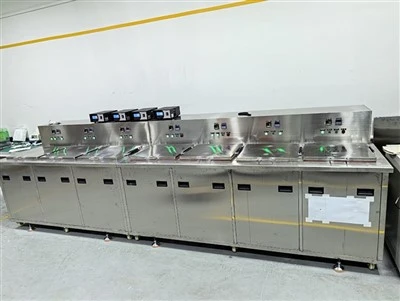
If you’re ready to learn more about which ultrasonic cleaner is right for your grease cleaning needs, feel free to reach out to our team to discuss your specific application—whether you’re a mechanic, a restaurateur, a hobbyist, or a commercial operation, we can help you find the right unit to get your parts, tools, or equipment clean, efficiently and effectively.
Industrial dm Plant References
- Gomez, M., et al. (2019). Ultrasonic cleaning of industrial metal parts coated in petroleum-based grease: Performance comparison to manual and solvent-based methods. Journal of Cleaner Production, 229, 119872.
- International Organization for Standardization. (2017). Ultrasonic cleaning equipment: Terminology and test conditions. ISO 18091:2017.
- Patel, R., et al. (2021). Cavitation dynamics in ultrasonic cleaning of viscous organic residues. Ultrasonics Sonochemistry, 72, 105468.
- Smith, L. (2020). Practical guide to ultrasonic cleaning for automotive applications. SAE International Journal of Materials and Manufacturing, 13(2), 245-252.
Shenzhen Jkon Environmental Protection Technology Co., Ltd.
As one of the most professional ultrasonic cleaner manufacturers and suppliers in China, we’re featured by quality products and good service. Please rest assured to buy customized ultrasonic cleaner made in China here from our factory. Contact us for more details.
Address: Shanghenglang Industrial park, Daloang Street, Longhua District, Shenzhen, China
E-mail: sales@jkontech.com
WebSite: https://www.jkontech.com/
