What Is the Clarity of Night Vision Images? A Supplier’s Guide to Understanding the Fine Line Between Visibility and Ambiguity Night Vision
As someone who’s spent the last decade working in the night vision industry, I’ve lost count of how many times potential customers have asked me: “Why is this image blurry? I thought night vision was supposed to let you see everything in the dark?” It’s a fair question—most people’s idea of night vision comes from Hollywood, where spy heroes zoom in on distant faces or read license plates like they’re in broad daylight. But the reality of night vision image clarity is a lot more nuanced than that, and as a supplier, it’s my job to break that down honestly without overpromising what our products can do.
First, let’s get one thing straight: night vision isn’t “seeing in complete darkness.” It’s amplifying the tiny amounts of light that exist in low-light environments—starlight, moonlight, even the faint glow of distant streetlights or airglow from the atmosphere. That amplified light is what creates the image, and its clarity depends on a chain of factors, all of which play a role in how sharp, detailed, and useful the final picture is. Let’s walk through each of these factors step by step, because understanding them is key to knowing what night vision clarity actually means.
The Core Tech That Shapes Clarity: Image Intensifier Tubes
At the heart of every night vision device is an image intensifier tube, and this is where 80% of image clarity is determined. Not all intensifier tubes are the same, which is why some night vision scopes cost a few hundred dollars and others run into the thousands. The three main generations (Gen 1, Gen 2, Gen 3) each have distinct clarity profiles, but even within a generation, there are tiers that make a big difference.
Gen 1 tubes, the most affordable option, are what you’ll find in basic binoculars or trail cameras. They work by gathering light, amplifying it, and converting it into a visible image—but they’re prone to what’s called “noise,” which looks like static on a old TV. That noise is basically random light particles that get amplified along with the signal, so even a sharp object can look fuzzy because the noise is overlaying it. Gen 1 tubes also have a lower resolution, meaning they can’t pick up fine details like the texture of a tree bark or a small animal’s facial features from more than 50 yards away. For casual use like backyard wildlife watching, that’s often enough, but for tasks like hunting at longer ranges or search and rescue, Gen 1 clarity falls short.
Gen 2 tubes are a big upgrade, with a thinner microchannel plate inside the tube that reduces noise and boosts resolution. This is where you start to get clearer, more defined images—Gen 2 can pick up details at up to 100 yards in moonless conditions, and the static is much less noticeable. The top end of Gen 2, called Gen 2+ (or “high performance” Gen 2), is even sharper, with finer detail and less glow around light sources. For many users, Gen 2+ hits a sweet spot: it’s more affordable than Gen 3, but the clarity is good enough for most professional and recreational uses.
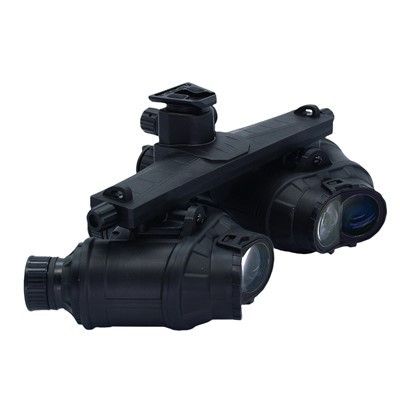
Gen 3 tubes are the gold standard for high-performance night vision. They use a gallium arsenide photocathode instead of the older, less sensitive materials, which means they gather 30-40% more light than Gen 2 tubes. That extra light translates to a much clearer image: Gen 3 can pick up fine details like a button on a jacket from 150 yards away, and the noise is so minimal it’s almost invisible. Most tactical night vision devices (like helmet-mounted goggles for law enforcement or military) use Gen 3 tubes, because their clarity is critical for making split-second decisions in low light. That said, Gen 3 tubes are expensive, and their clarity can drop if they’re exposed to bright light (like a flashlight or car headlights) without a protective shutter.
Clarity Isn’t Just About Tubes: Optics Matter Too
I see a lot of customers fixate on the intensifier tube, but the lens system that goes with it is just as important for image clarity. Think of it like a camera: even the best sensor will take a blurry photo if the lens is cheap or poorly aligned. Night vision devices have two key optical components: the objective lens (which gathers incoming light) and the eyepiece lens (which you look through to see the amplified image).
Cheap night vision devices often use plastic objective lenses instead of glass, or lenses with low refractive quality. That causes something called “spherical aberration,” where light rays passing through the edge of the lens don’t focus at the same point as light through the center, leading to a blurry, warped image. Even with a good intensifier tube, a plastic lens will ruin clarity by softening details and creating distortion around the edges of the frame. At our company, we use multi-coated glass lenses for every device we sell—coated lenses reduce glare and ensure more light reaches the intensifier tube, which in turn makes the image sharper and brighter.
Another optical factor is field of view (FOV). A wide FOV lets you see more of your surroundings at once, but if the lens design is poor, wide FOV can lead to more distortion and lower clarity at the edges. Narrower FOV devices (like long-range thermal scopes) have a tighter, sharper image, but you have to move them more to scan an area. It’s a trade-off, and the best night vision products balance FOV and clarity for the user’s intended use.
Environmental Factors That Test Clarity
Even the most high-end Gen 3 tube and glass lens won’t produce a clear image in bad conditions. That’s a big misconception I run into all the time: customers assume night vision works the same in a forest at midnight as it does on a clear mountain ridge. But environmental conditions play a huge role in image clarity, and they’re often outside of a supplier’s control.
First, there’s the amount of ambient light. If it’s a completely overcast, moonless night in a dense forest, there’s barely any light to amplify—so even a Gen 3 tube will have more noise, and details will be harder to pick out. On the other hand, a bright moon or distant city lights will make the image much clearer, because there’s more light to work with. That’s why we always tell customers to consider their typical environment when choosing a device: a Gen 1 might work for suburban backyard use, but a Gen 2+ is a better bet for remote, dark woods.
Then there’s weather and atmospheric interference. Fog, rain, and even high humidity can scatter light, making the image look hazy and reducing clarity. This is where a lot of new users get frustrated—they expect to see clearly through fog, but night vision amplifies light, it doesn’t see through particles in the air. Thermal imaging (a different tech that detects heat) works better in fog, but that’s a whole other product. For visible-light night vision, the best you can do in fog is reduce the device’s gain (the amount of amplification) to cut down on scattered light, though that will make the image darker.
Vibration and movement are another hidden factor. If you’re holding a night vision device while walking or driving, small shakes can make the image blurry, even if the tube and lens are perfect. That’s why tactical users rely on helmet mounts or tripods—stable mounting keeps the image sharp, whereas handheld use will always have some motion blur.
What “Clarity” Actually Means for Your Use Case
Here’s the part I want to emphasize most: clarity isn’t a one-size-fits-all metric. A “clear” image for a hunter tracking a deer at 100 yards is different from a “clear” image for a birdwatcher identifying a songbird at 50 yards, which is different from a police officer verifying a suspect’s face at 20 yards. As a supplier, I don’t just sell products—I help customers match the right clarity level to their needs, because overbuying (a $5,000 Gen 3 scope for backyard use) is just as much a waste as underbuying (a $200 Gen 1 scope for long-range hunting).
For example, trail camera users: if you’re just looking to see if a deer walked through your yard, a Gen 1 scope’s clarity is more than enough, and it’s affordable. But if you’re a law enforcement officer conducting a night-time search, you need that Gen 3 clarity to tell the difference between a person and a tree branch, or to read a license plate from 150 yards. And for people who use night vision for navigation while hiking, mid-tier Gen 2+ gives you sharp enough details to see the trail and avoid obstacles without the extra cost of Gen 3.
Common Myths That Mess Up Clarity Expectations
Over the years, I’ve heard so many myths that lead to confusion about night vision clarity. Let’s debunk a few of the most common ones:
- “Higher resolution always means clearer.” Resolution (measured in line pairs per millimeter, or lp/mm) is part of clarity, but it’s not the whole story. A Gen 2 tube with 60 lp/mm might look sharper than a cheap Gen 1 with 40 lp/mm, but a Gen 3 tube with 70 lp/mm will outperform both because of its lower noise. Noise can make a lower-resolution image look more blurry than a higher-resolution, low-noise one.
- “Night vision can see in total darkness.” This is the biggest myth. Total darkness has no light to amplify, so night vision will just show a blank screen or static. There’s no such thing as a night vision device that works in absolute darkness—if someone tells you differently, they’re overpromising.
- “Thermal vision is the same as night vision.” Thermal detects heat, not visible light, so its clarity works differently in fog or darkness, but it can’t pick up fine details like a face’s features the way visible-light night vision can. They’re both useful, but they’re not interchangeable.
How We Prioritize Clarity in Our Products
At our company, we don’t cut corners on the parts that matter for clarity. We source the highest-tier intensifier tubes available for each generation—Gen 2+ for recreational and mid-range tactical use, and top-tier Gen 3 for professional applications. Every device we assemble uses multi-coated glass lenses, and we calibrate each intensifier tube individually to ensure minimal noise and sharp focus. We also include a manual gain control, so users can adjust the amount of light amplification to match their environment—too much gain creates noise and blurriness, too little makes the image dark, so being able to tweak it is a huge help for clarity in changing conditions.
We also test every product in real-world conditions, not just in a lab. Last year, we tested a batch of our Gen 2 binoculars in a remote national park, where light levels were 0.001 lux (about 1/1000th of the light on a full moon night). The image clarity was so good that our team could identify small rabbits from 80 yards away, even in the dense pine forest—we wouldn’t sell a product that didn’t perform that well, because we know our customers rely on these devices for important tasks.
Wrapping Up: Clarity Is a Balance of Tech and Expectations
At the end of the day, night vision image clarity isn’t a fixed number—it’s a combination of the tube quality, optics, environment, and what you need to use the image for. As a supplier, my goal isn’t to sell you the most expensive device; it’s to help you understand what clarity you actually need, so you get a product that works for your specific use case. If you’re a hunter, a birder, a law enforcement officer, or just someone who wants to explore the night, there’s a night vision device with the right clarity level for you.

If you’re ready to learn more about which night vision product matches your needs, or have questions about image clarity for a specific environment or task, don’t hesitate to reach out to us to discuss your requirements. We’re here to help you find the right solution, not just make a sale.
Night Vision Binoculars References
- “Night Vision Technology: Principles and Applications,” Office of Naval Research, U.S. Department of the Navy, 2021.
- “Image Intensifier Tube Performance Metrics,” International Society for Optics and Photonics (SPIE), 2019.
- “Low-Light Imaging: The Impact of Ambient Light on Visibility,” Journal of Optical Engineering, Vol. 58, No. 10, 2019.
- “Optical Distortion in Night Vision Systems,” Night Vision and Electronic Sensors Directorate, U.S. Army, 2020.
- “User Expectations for Night Vision Clarity: A Survey of Recreational and Professional Users,” Human Factors and Ergonomics Society, 2022.
Shenzhen Detyl Optoelectronics Co., Ltd.
With abundant experience, we are one of the most professional night vision manufacturers and suppliers in China. Please rest assured to buy customized night vision at competitive price from our factory. For pricelist and quotation, contact us now.
Address: 4th Floor, Building 3, Factory, No. 20, Second Industrial Avenue, Tangxiayong Community, Yanluo Street, Bao’an District, Shenzhen
E-mail: sales@detyl.com
WebSite: https://www.detyl.net/
