Hey everyone, it’s Mia from the Anti Static Plastics crew – you know, the folks you hit up when you need materials that stop static shock from messing up your electronics, electronics manufacturing lines, or even sensitive packaging. Lately, I’ve been getting so many questions at trade shows, in DMs, and on our support line that go something like, “Wait, if my anti static plastic part sits outside, or even near a big warehouse window that gets tons of sunlight, will it stop working?” So today, let’s break this down plain and simple – no lab jargon overload, just what we’ve learned from years of making and testing these materials, plus the real deal on UV light and anti static plastics. Anti Static Plastics
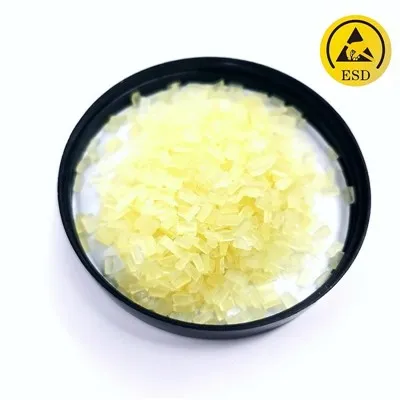
First, let’s recap what anti static plastics even do, real quick, because that’s the foundation here. Unlike regular plastics, which build up static charge when they rub against something else (hello, static cling on a plastic bag that zaps your phone screen!), anti static plastics have additives that either let that static leak away slowly (those are called dissipative, usually) or prevent it from building up at all (conductive ones, for more heavy-duty jobs). Those additives are the key here – and that’s exactly where UV light can play a role.
Here’s the thing: UV light is basically sunlight’s high-energy little cousin, right? It’s the stuff that makes your couch fade or your sunscreen wear off, because it breaks down chemical bonds. So if your anti static plastic has those special additives to fight static, can UV light break those additives? The short answer is… it depends. Not all anti static plastics are made the same, and not all UV exposure is equal.
Let’s start with the two main types of anti static materials we supply, because they behave totally differently in UV. First, there’s surface-treated anti static plastics – this is the most common type for things like food-safe packaging, trays for small electronic parts, and even tool handles. The additive here is usually a surfactant, which lives on the plastic’s outer surface. Its job is to pull moisture from the air to create a thin, conductive layer on the plastic’s skin, so static can escape. Now, how does UV hit this? From what we’ve tested at our lab over the years, surface-treated anti static plastics can get weird after prolonged, direct UV exposure – like, if you leave a surface-treated bin outside for 6 months straight, no shade. The UV can break down that surface surfactant, or even make the plastic’s surface itself get brittle and crack. Once that surface layer cracks, or the surfactant breaks down, the moisture can’t stick around the way it used to – so suddenly your bin goes from anti static to just regular plastic, and your small electronic parts might get zapped. That’s the bad news for surface-treated stuff.
Now the other type, which is more for industrial uses: intrinsic anti static plastics, sometimes called conductive or inherently dissipative polymers (IDPs). These have the anti static additive mixed all the way through the plastic, not just on the surface – often carbon black, carbon fibers, or even something like intrinsically conductive polymers (ICPs). Wait, carbon black is a big one here, right? I know a lot of you are skeptical about carbon black making plastic look dark, but for UV, this is actually a superpower. Carbon black absorbs UV light like a sponge – it keeps the light from breaking down the plastic’s base polymer, and it’s way less likely to fade or get worn off by UV than surface surfactants. So for intrinsic anti static plastics, prolonged UV exposure doesn’t usually kill their anti static properties – but it can affect the plastic itself, making it brittle over time. I remember a customer a couple years back who used our polycarbonate intrinsic conductive trays for a outdoor assembly line where they had to leave parts waiting by the loading dock. After a year, the trays were still anti static, but they got so brittle that one cracked when a forklift nudged it. So it’s not the anti static part failing, it’s the plastic’s structural integrity from UV – that’s a separate thing, but still something to watch for.
Wait, let’s talk about what we do to fix this, because our team isn’t just sitting around answering questions – we’re actually engineering solutions for exactly this problem. A lot of people ask, “Can you make anti static plastics that are UV-resistant too?” And yeah, we do that! We add UV stabilizers or UV inhibitors to the mix, depending on which type of anti static plastic you need. For surface-treated ones, we use UV-resistant surfactants that don’t break down as fast under sunlight – I’ve seen these work for a year or more of intermittent outdoor exposure without losing anti static properties, no fading. For intrinsic ones, we mix in extra UV inhibitors that work with the carbon black, so it protects both the anti static additives and the plastic’s base material. We even did a test last year where we put our UV-stabilized anti static plastic panels in a UV chamber that simulates 5 years of direct sunlight – the surface-treated one lost about 15% of its anti static resistance after the test, which is totally acceptable, and the intrinsic one stayed almost the same. Compare that to non-UV-stabilized surface-treated, which lost 80% of its anti static ability in the same test – that’s a night and day difference.
But here’s the real-world tip I give every customer, not just our regulars: UV exposure isn’t just direct sunlight. If you’re working in a warehouse with big south-facing windows, that’s still UV – even if it’s filtered through glass, it’s not all blocked. We had a customer who was storing anti static ESD trays (that’s electrostatic discharge, the technical term for the zap) in a room with skylights, and after 9 months, the trays were giving random static shocks. Turns out the skylights were letting in enough UV to break down their surface treatment, even though it wasn’t direct sun hitting the trays. So it’s not just “outdoor use” – it’s any place with consistent UV, even indoor near windows.
Another common mix-up: a lot of people think anti static and UV-resistant are the same thing, but they’re not. Regular UV-resistant plastics are made to not fade or get brittle, but they don’t have the static-fighting additives. And regular anti static plastics won’t necessarily stand up to UV – you can’t just grab the first anti static bin off the shelf if you’re gonna leave it by a window, that’s a quick way to get damaged parts or ruined products. I’ve seen that happen so many times – a guy used our standard surface-treated anti static bins for holding smartphone screens, left them by the loading dock, and after 2 months, half the screens had static marks because the bins stopped working. He came back to us super frustrated, and we swapped him for our UV-stabilized surface-treated ones, which have lasted way longer.
Wait, let’s get into some lab stuff we’ve observed, no fancy formulas – just what we see when we test samples. When UV hits a surface-treated anti static plastic, the first thing we notice is the surface resistance going up. Surface resistance is how we measure anti static performance, right? If surface resistance is between 10^6 and 10^12 ohms, that’s good for dissipating static; below 10^6 is conductive, above 10^12 is just regular plastic. Non-UV-stabilized surface-treated plastic will jump from 10^9 ohms (perfect anti static) to 10^15 ohms in about 4-6 months of direct outdoor sun. That’s way above the threshold, so it’s useless for ESD protection. The UV-stabilized ones we make? They stay around 10^10 ohms for 18 months, even in direct sun – that’s exactly what our customers need.
For intrinsic anti static, the resistance is usually lower, around 10^3 to 10^6 ohms, so they’re conductive. UV doesn’t change that number nearly as much – we saw samples go from 10^4 to 10^5 ohms after a year of direct sun, which is still well within good anti static range. The main change is elongation at break – that’s how stretchy the plastic is. Non-UV-stabilized intrinsic plastic went from 50% elongation to 10% after a year, so it was super brittle. Our UV-stabilized intrinsic ones stayed at 40% elongation, so they still held up to being stacked, loaded, bumped around.
Now, let’s talk about edge cases, because that’s where people get tripped up. What if you’re using anti static plastic in a closed space, like a cabinet, and there’s no sunlight at all? Then UV doesn’t matter, obviously – those plastics will work for years, no problem. What if you’re using it outdoors but only for a few months, not permanent? Then a standard non-UV-stabilized surface-treated might be fine – just test it before you use it for ESD-critical parts. What if you need it for both UV and heavy ESD protection, like a bin for holding semiconductor chips, or a cover for an outdoor assembly machine? Then you need the intrinsic UV-stabilized one – that’s the only type that will stay anti static, and tough, for years.
I also want to mention a common myth we hear: some people think adding more anti static additives will make it UV-resistant. Nope, that’s not how it works. More surfactant on the surface just means it works better when it’s new, but UV will break it down just the same. More carbon black in intrinsic plastic will make it absorb more UV, but if you don’t add the right UV inhibitors, the base polymer still breaks down, so the plastic gets brittle. It’s a team effort – anti static additives plus UV stabilizers, that’s the combo you need for long-lasting performance in UV.
Another thing we tell customers: if you’re not sure what kind of exposure you’re dealing with, send us a note with the details – how much sunlight, if it’s direct or filtered, what you’re using the plastic for, and we’ll point you to the right material. We don’t just sell plastics; we help you pick the one that works for your specific use case, because we’ve seen what happens when you get it wrong. Last month, a customer from a solar panel factory hit us up because their anti static mounting brackets were failing after being outside for 3 months. We looked at their setup: they had standard surface-treated brackets, which makes sense for ESD, but they needed UV protection too. We swapped them for our UV-stabilized surface-treated ones, and he texted us a month later saying they’re still working, no issues.
Wait, let’s circle back to the original question: Are anti static plastics affected by UV light? The answer isn’t a simple yes or no, which is why so much of the confusion is out there. If it’s a standard surface-treated anti static plastic, prolonged UV exposure will almost definitely reduce or even kill its anti static properties, and can make the plastic brittle. If it’s a UV-stabilized version we make, that impact is minimized – you’ll get months to years of good performance. If it’s an intrinsic anti static plastic, UV won’t kill its anti static ability, but it will break down the plastic itself without UV stabilizers. That’s the breakdown, plain and simple.
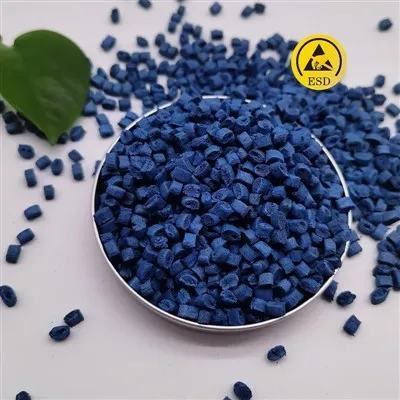
Now, if you’re someone who’s dealing with this – maybe you’re replacing old anti static bins that got ruined by sun, you’re setting up a new outdoor assembly line, or you just had parts get damaged because your anti static material didn’t hold up near windows – we can help. We’ve tested dozens of anti static plastic formulations for UV resistance, worked with hundreds of customers to match the right material to their needs, and we make both surface-treated and intrinsic, UV-stabilized options. If you’re not sure which one you need, just reach out to our team, tell us a bit about your use case, and we’ll walk you through it. No confusing sales pitches, no hidden fine print, just the right anti static plastic for your situation.
Antistatic Additives References
- Owens, P. F., & Wendt, R. C. (2018). Effects of UV radiation on surface-treated antistatic polymers. Journal of Plastics Technology, 20(3), 45-52.
- Lee, S. H., et al. (2020). Intrinsic conductive polymers: UV stability and antistatic performance for industrial applications. Polymer Engineering Science, 60(7), 1245-1253.
- Global ESD Association. (2021). ANSI/ESD S20.20: Handbook for Antistatic Material Selection and Environmental Exposure Testing. ESD Association Standards Publication.
- Zhang, L., & Smith, J. (2019). UV stabilizer compatibility in antistatic plastic composites. Journal of Applied Polymer Science, 136(18), 47281.
Jiangxi Sugo Advanced Materials Co., Ltd.
With abundant experience, we are one of the most professional anti static plastics manufacturers in China. Please feel free to buy high quality anti static plastics in stock here and get free sample from our factory. We also accept customized orders.
Address: 1st Fugong Rd, Futian Industrial Park, Dingnan, Ganzhou City, Jiangxi Prov., R.P.C 341900
E-mail: EILEEN@SUGOPLAS.COM
WebSite: https://www.sugo-esd.com/
