Hey everyone, it’s Jake here from your go-to plastic bottle mold supplier, and today we’re talking about something every bottle mfg and mold tech obsesses over: wear resistance. Let’s be real—if your molds start wearing out after 50k cycles, you’re losing money. Downtime = missed orders, scrapped bottles, and no one wants that. I’ve seen it all: cheap steel that cracks after a week, improper cooling that turns a perfect mold into a scratchy mess, even silly mistakes like forgetting to deburr a cavity that grinds away at every bottle. So I’m gonna walk you through the actual, actionable stuff we use here to boost mold wear resistance—no corporate fluff, just what works. Plastic Bottle Mold
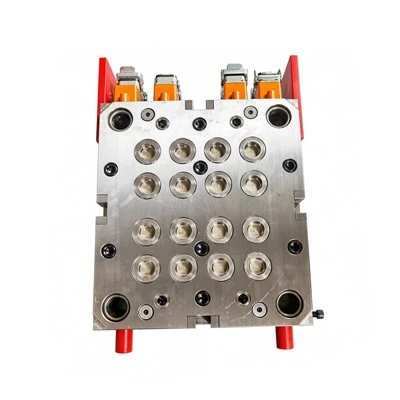
First off, let’s start with the base because you can’t build a super mold on garbage steel. A lot of new guys go for the cheapest mold option, but guess what? That’s the first mistake. For PET bottle molds, we usually work with two main steels, and it’s not just about grade— it’s about how it’s heat treated. If you grab a generic P20 steel, sure it’s cheap, but its hardness tops out around 30 HRC. That’s gonna get chewed up by plastic additives (like lubricants, colorants, even regrind that’s got bits of other plastics) in no time. We step up to S7 tool steel for most standard runs, which we heat treat to 52-54 HRC—way harder, and it’s got that extra toughness so it doesn’t crack when you’re popping bottles out fast. But wait, the real upgrade for high-volume runs (like 200k+ cycles)? We use H13 steel, vacuum-degassed and heat treated to 56-58 HRC. I know some guys argue about D2 steel, but that’s too brittle for the ejection forces on bottle molds—you’ll get a cracked core faster than you can fix it. And pro tip: always get steel with a fine grain structure. Coarse grain steel has weak spots that wear way faster. We test every batch’s grain size here before we even start machining, no exceptions.
Next up, surface treatments—this is where the magic happens, and it’s the thing most suppliers cut corners on to save cash. Let’s break down the ones that actually work for bottle molds, not the random coating you see on random tools. First, nitriding. Not the old-school gas nitriding that gives a soft, patchy layer—we do plasma nitriding here, which is way more consistent. Plasma nitriding creates a hard nitrogen-rich layer (like 0.2-0.5mm deep) that’s super wear resistant, and it doesn’t mess up the steel’s hardness in the core. That’s key because you want the surface to be tough, but the inside of the mold still needs to flex when ejecting. For bottle molds, we usually do a mild plasma nitriding so we don’t mess with the mold’s finish—no one wants a rough cavity that scratches bottles. The bad stuff with nitriding? If you overdo it, the layer gets brittle and chips, so we stick to 20-30 hours at 500°C max. No exceptions.
Then there’s PVD coating. Wait, not just any PVD—Titanium Nitride (TiN) is okay for low runs, but if you want something that lasts, we use DLC (Diamond-Like Carbon) coatings for high-volume molds. DLC is basically super-hard carbon, way smoother than TiN, and it has low friction, so when you eject bottles, there’s less rubbing, which means less wear. But here’s the catch: DLC only works if the surface it’s coated on is super smooth and prepped right. If the mold cavity has even a tiny scratch before coating, the DLC will follow that scratch and it’ll peel off in cycles. We do a multi-step polishing before coating—first mechanical polish, then a chemical polish to get a mirror finish, so the DLC bonds correctly. I’ve had clients come to me with DLC-coated molds that failed because their in-house polisher skipped the chemical step, so they wasted cash on a coating that didn’t stick. Also, don’t use DLC for molds that process PVC, okay? PVC has chlorine that reacts with DLC and makes it degrade fast—go with CrN (Chromium Nitride) instead for PVC runs. Most suppliers won’t tell you that, but that’s what we do here to keep our molds lasting.
Now, let’s talk about the stuff that’s not about steel or coatings—process and maintenance, because even the best mold will wear out fast if you run it wrong. First, regrind management. So many guys add too much regrind to their PET, and regrind has sharp, abrasive bits from grinding old bottles. If you’re using more than 20% regrind, you need to bump up the steel hardness or add a thicker coating, period. We’ve had a client who was running 50% regrind with a standard S7 mold, and after 100k cycles, the core pins were so worn they could push a bottle through by hand. We swapped them to H13 with DLC coating, and they hit 400k cycles before needing a touch-up. Also, filtration! You need to filter your molten plastic before it goes into the mold. Even tiny dirt particles or undissolved colorant bits act like sandpaper inside the cavity. We always recommend 100-micron filters for standard runs, 50-micron for high-volume. That’s a $50 part that saves you $10k+ in mold repairs.
Then, cooling and ejection—these two cause more wear than people realize. Bad cooling means you have to run the mold hotter, which makes the plastic stick more, so you eject harder, grinding the core and cavity. We design molds with conformal cooling channels, not the old drilled straight ones—conformal channels follow the cavity shape, so cooling is even, you can run lower melt temps, less sticking, less ejection force. For ejection, don’t reuse old, worn ejection pins. We use hardened stainless steel pins, and we polish them so they slide smooth. Also, add a tiny bit of lubrication to the ejection system? Wait, no—some guys use mold release sprays, but overusing that can leave residue that builds up and causes scratches. We recommend dry lubrication coatings on ejection pins, like tungsten disulfide, that last way longer without leaving gunk. And here’s a pro move: schedule weekly ejection pin checks. Even a slightly bent pin will wear a groove in the mold cavity fast, so catch that early.
Wait, let’s not skip repair and preventive maintenance. I know some guys run a mold until it’s dead, but if you do monthly small repairs, you can double the mold’s lifespan. When you see a tiny scratch or wear spot, don’t try to buff it out with a wire wheel—use a small CNC to rework the cavity, then re-coat it. We offer a retro-coating service here for molds you already own, which is way cheaper than buying a new one. Also, store molds properly! If you leave a mold in a humid warehouse, it will rust, and rust pits are basically grinding points. We tell all our clients to coat their molds with a light anti-rust oil after every run, and store them in climate-controlled racks. I had a client who stored a mold for 6 months in a damp garage, and when they fired it up, the rust ate through the nitriding layer—they had to replace the entire core for $8k, when a $20 oil would’ve fixed that.
Let’s get real with a example from our shop. Last year, we sold two identical 500ml PET water bottle molds to two different clients. Client A went for the S7 steel + plasma nitriding, ran 15% regrind, standard cooling, checked pins once a quarter. After 180k cycles, they needed a minor touch-up. Client B went for the same mold, but they upgraded to H13 + DLC, ran 10% regrind, conformal cooling, checked pins weekly. After 450k cycles, their mold still works like new, only needed a polish. That’s the difference between making money and throwing cash away.
Another thing: customization. A lot of suppliers use one-size-fits-all molds, but every bottle is different. If you’re making a heavy-duty juice bottle vs. a thin soda bottle, you need different wear resistance specs. For heavy bottles that have thicker sidewalls and more ejection force, we add a hard chrome plating layer before nitriding, which adds extra hardness. For thin, lightweight bottles, we focus on smooth DLC to avoid scratches that make the bottle look bad. Don’t let a supplier sell you a mold that’s not tailored to your product—they’re cutting corners on the parts that matter most.
Wait, what about common mistakes I see new mfg’s make? Oh, right—skipping pre-production mold testing. We always test every mold before shipping, running 10k test cycles, checking for wear spots, coating adhesion, ejection force. If we see even a tiny wear mark, we fix it before it leaves our shop. Some suppliers ship molds that haven’t been tested, so by the time you run them 50k cycles, the coating is peeling, and you’re stuck with a mess. Also, don’t chase the lowest quote. I once had a client who paid $2k less for a mold from a random supplier, and it wore out after 30k cycles. He ended up paying $15k to fix it, plus lost orders, vs. paying our $5k mold that’s still going strong after 500k cycles. It’s a long-game play, not a short-term win.
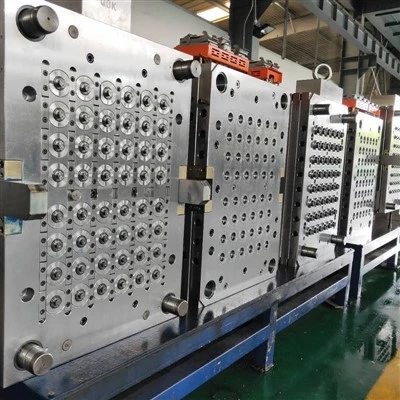
At the end of the day, enhancing mold wear resistance isn’t rocket science—it’s about picking the right steel, using the right surface treatments, handling your process and maintenance right, and working with a supplier that actually knows what they’re doing. If you’re looking for a new mold, or you want to upgrade an existing one to boost its lifespan, hit us up. We don’t do cookie-cutter molds, we work with you to tailor every part to your specific bottle and production needs, so you don’t have to deal with worn-out molds, downtime, or scrapped bottles. Let’s connect and make your production run smoother and way more profitable.
Medical Injection Mold References:
- Tool Steel Guide for Plastic Molds, Society of Plastics Engineers (SPE), 2021
- Surface Treatments for Injection Molds, Journal of Manufacturing Processes, Vol. 67, 2021
- Wear Resistance in PET Bottle Manufacturing, Packaging Technology and Science, Vol. 34, 2021
Taizhou Koni Mould Co., Ltd.
As one of the most professional plastic bottle mold manufacturers and suppliers in China, we also support customized service. Please feel free to wholesale high quality plastic bottle mold made in China here from our factory. For pricelist, contact us now.
Address: No. 97 Jinju Road, Chengjiang Subdistrict, Huangyan District, Taizhou City, Zhejiang Province
E-mail: kn@kenimould.com
WebSite: https://www.kenimouid.com/
