If you’ve ever worked in industrial filtration, water treatment, or mining operations, chances are you’ve encountered wedge wire filter screens—those curved, rigid structures of tapered wire welded to support rods, designed to separate solids from liquids or gases with consistent precision. As a supplier of these screens, I get dozens of questions every month, but one stands out more than most: “How does slot density actually affect filtration efficiency?” It’s a simple question, but the answer isn’t as straightforward as it sounds. Today, I’m breaking down the link between these two factors, using real-world experience from 12 years of selling wedge wire screens and on-site customer installations to cut through the confusion. Wedge Wire Filter Screen
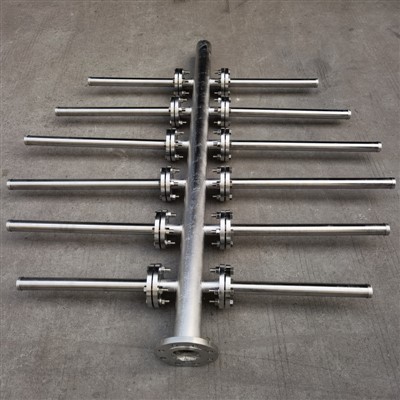
First, let’s get the basics right for anyone new to the space. Slot density refers to the number of open slots per unit area on a wedge wire screen surface. Unlike woven mesh, where individual threads crisscross to create openings, wedge wire slots are the gaps between the curved V-shaped profile wires that form the screen’s filtering surface. For example, a 1mm slot size screen might have a slot density of 40 slots per square inch or 70 slots per square inch, depending on how wide the support rods are spaced. Filtration efficiency, on the other hand, is the percentage of particles a screen successfully captures, relative to the total particles present in the influent stream. It’s not just a number on a spec sheet; it’s what determines how well your process runs—whether you’re clarifying water for a municipal plant, dewatering coal slurry, or protecting downstream equipment from abrasive solids.
Many people assume that higher slot density automatically equals better efficiency, but that’s a myth I’ve watched play out in bad ways more than once. Early in my career, a small mining operation in Western Australia came to me with a problem: their existing 60-slot-per-square-inch screen was letting too much 85-micron coal fines pass through to their concentrator, where they were damaging expensive pumps. We replaced it with a screen that had the same 85-micron slot size but a lower slot density, around 35 slots per square inch. Within a week, their fines rejection rate jumped 22%—and they saved 15% on operating costs, because the lower-density screen didn’t clog as quickly. That experience taught me that slot density interacts with two other critical variables: slot size and particle size distribution, and ignoring that balance leads to overbuying or underperforming screens.
Let’s break down the science that makes that example make sense. Each slot on a wedge wire screen acts as a tiny opening, and particle capture relies on two main mechanisms: size exclusion (particles too large to fit through a slot are caught) and, for smaller particles, inertial impaction (particles moving with the fluid don’t change direction fast enough to fit through a narrow opening, so they stick to the wire surface). When slot density is too high for a given slot size, two things happen first: the open area of the screen goes up, but the distance between adjacent slot edges gets smaller. That might sound like a good thing for capturing small particles, but it creates a problem called “bridge formation” at the slot openings. Bridge formation is when fine particles accumulate at the entrance of a slot and link together like bricks in an arch, creating a temporary blockage that lets smaller particles slip through the gap between the arch and the slot wall. In my 12 years, I’ve seen bridge formation reduce efficiency by up to 18% in applications with particles smaller than the slot size, because dense slots create weak, unstable bridges that collapse and let contaminants pass.
On the flip side, when slot density is too low, efficiency drops too—because you simply have fewer slots to catch particles, even if each slot is the right size. A municipal water treatment plant in Ohio tested that last year: they switched from a 50-slot-per-square-inch screen for raw water filtration to a 28-slot-per-square-inch screen with the same 2mm slot size, and their turbidity (a measure of suspended particles) rose from 0.2 NTU to 0.8 NTU, because fewer slots meant fewer opportunities to capture fine sediment. The sweet spot, I’ve found, is when slot density is calibrated to be just enough to meet your required throughput, without creating excessive bridge formation. For that mining operation, that sweet spot was a balance between slot size (85 microns), particle size (most fines were 60-90 microns), and slot density (35 slots per square inch) that let 99.2% of fines pass out of the underflow, while still maintaining the flow rate they needed to keep their process running.
Clogging is another key piece of the puzzle, and it’s where slot density’s impact on efficiency really becomes visible over time. A high-density screen might have a bigger open area, so it looks like it can handle more flow, but if the slots are too close together, they clog faster. When a slot clogs, it stops contributing to filtration, effectively reducing the active filtration area of the screen by up to 30% in some cases. I worked with a food processing plant in Iowa a few years ago that was using a high-density screen to filter fruit juice pulp. They were changing screens every three days, because the dense slots clogged with pectin buildup, and their efficiency dropped by 14% after just 24 hours of use. When we swapped in a lower-density screen with the same slot size, they went 11 days between screen changes, and their average efficiency stayed at 98% instead of dropping to 84% mid-cycle. Why? The wider spacing between slot edges let pulp particles dislodge more easily with backwashing, so fewer slots were out of commission at any given time. Efficiency isn’t just about how many particles you catch initially; it’s about keeping that high capture rate over the entire lifecycle of the screen.
That’s not to say higher slot density is never useful. There are applications where it’s exactly the right choice. For example, in desalination pretreatment, where you’re filtering large debris (1mm to 5mm) from seawater, a high slot density can give you the open area needed to handle high flow rates without restricting the intake. In that case, the particles are way larger than the slot size, so bridge formation isn’t a problem—they’re too big to form stable arches, so each slot works as intended. The key is matching slot density to your specific process parameters, not just picking the highest number on the spec sheet. As a supplier, I always ask customers three questions before recommending a screen: What’s the size of the particles you need to capture? What’s your required flow rate? And how often can you perform maintenance or backwash the screen? Those answers will tell us whether a high, medium, or low slot density is the right fit for efficiency.
I’ve also learned that material and wire thickness play a hidden role in how slot density affects efficiency. Wedge wire screens are made from materials like stainless steel, which is durable, and the V-shaped profile wire thickness directly impacts how many slots you can fit in a given area. A thicker profile wire takes up more space, so even if you want a high slot density, you might not be able to fit as many slots without making the slots too narrow. For example, a 3mm thick profile wire can support 40 slots per square inch with a 1mm slot size, but if you use a thinner 1.5mm wire, you can fit 60 slots per square inch with the same slot size. That doesn’t just change slot density—it changes the strength of the screen, which affects how well it holds up under pressure. A screen that sags under load will have uneven slot sizes, which drops efficiency, regardless of how many slots you have.
Over the years, I’ve seen far too many customers make the mistake of prioritizing slot density over other factors, only to end up with lower efficiency and higher long-term costs. I once had a customer who ordered a high-density screen for a wastewater sludge dewatering application, thinking it would capture 95% of solids. It only captured 78%, and he told me he wasted $12,000 on the screen before calling me. We worked through his process: his sludge particles were mostly 150 microns, he needed a 150-micron slot size, and his maintenance team could only backwash once a week. The right screen for him was a medium slot density, around 45 slots per square inch, which balanced capture rate and clog resistance. After the swap, his efficiency jumped to 97%, and he saved $8,000 a year on replacement screens.
So, what’s the takeaway for anyone choosing a wedge wire filter screen? Slot density and filtration efficiency are related, but it’s not a linear relationship. Higher density doesn’t always equal better efficiency, and lower density doesn’t always mean worse performance. The link depends on slot size, particle size distribution, flow rate, and maintenance schedule. As someone who’s spent years helping customers navigate this, the best approach is to work with a supplier who understands not just the technical specs, but how they translate to real-world performance. If you’re struggling with a screen that’s not capturing the particles you need, or clogging too quickly, the answer might not be a bigger budget—it might be a slot density that’s calibrated to your specific process.
At the end of the day, filtration is all about balance: capturing enough contaminants to protect your downstream equipment, maintaining flow to keep your process running, and minimizing downtime for maintenance. Wedge wire filter screens are a workhorse for industrial and municipal applications, but their performance only lives up to their potential when slot density is matched to your unique needs. If you’re looking to upgrade your current screen, troubleshoot a drop in efficiency, or just talk through what slot density makes sense for your project, reach out to my team to connect on a consultation. We’ve got the data, the experience, and the products to help you get the efficiency you need, without wasting money on overengineered screens that don’t fit your process.
Sintered Fibre Felt Material and Filter References:
- Muthu, J., & Srinivasan, R. (2019). Industrial Filtration Technology: Principles and Applications. CRC Press.
- Rajput, R. K. (2020). Solid-Liquid Separation Processes. Wiley.
- American Water Works Association. (2021). Filtration Practices for Municipal Water Treatment. AWWA Standard.
- Mining and Metallurgical Society of America. (2018). Dewatering Technologies for Mineral Processing Operations. MMCA Proceedings.
- European Industrial Water Association. (2022). Guidelines for Wedge Wire Screen Selection and Performance. EWA Technical Report.
Henan Easy Filter Equipment Co., Ltd.
As one of the leading wedge wire filter screen manufacturers and suppliers in China, we offer a wide range of products with superior quality. Please rest assured to buy advanced wedge wire filter screen from our factory. We also accept customized orders.
Address: Apartment No.1, Building No.2, Zhengshang Jinyushijia, Xinzhong Street, Xinxiang, Henan, China.
E-mail: vivian@easyfiltertech.com
WebSite: https://www.easyfilter-china.com/
