Hey there, let’s cut to the chase—if you’re reading this, chances are you’ve got a deionized (DI) water system on the fritz, and you’re probably Googling “can I fix this myself or do I need to shell out for a whole new unit?” Spoiler alert: more often than not, the answer is “yes, it can be repaired.” And as a DI water system supplier who’s been in this game for 12+ years, I’ve seen every single issue under the sun—from random pressure drops to wonky resistivity readings that make zero sense. Let’s break this down like we’re chatting over a coffee (minus the coffee stains on your parts manual, promise). Deionized Water System
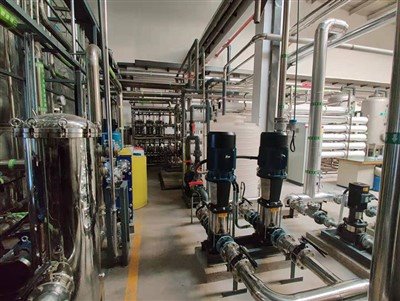
First, let’s get one thing straight: DI systems aren’t rocket science, but they’re also not something you should tinker with if you’ve never looked under the hood. I’ve had customers call me at 2 a.m. panicking because their lab’s water is “dirty” and they thought blasting the resin tanks with a garden hose would fix it. Spoiler 2: that’s a terrible idea. But before we get to do’s and don’ts, let’s go over what actually makes a DI system tick. Basic DI systems have two main parts: the pre-filters (usually sediment or carbon filters that catch gunk before it hits the resin) and the ion-exchange resin beds (that’s the stuff that swaps out bad ions like calcium and magnesium for good ones like hydrogen and hydroxide to make pure water). More advanced ones have mixed-bed resin polishing or reverse osmosis (RO) pre-treatment, but the core idea is the same.
Now, the million-dollar question: can it be repaired? Let’s start with the most common issues, because 90% of the time, that’s where the fix lives. Number one: low resistivity readings (meaning your water isn’t pure enough). This is the big one that sends people into a frenzy. Nine times out of 10, it’s not the whole system dying—it’s just the resin beds. Resin doesn’t last forever, right? It gets “clogged” with all the ions it’s swapped, so after a while, it can’t do its job anymore. Wait, but do you have to replace it? No, most of the time you can regenerate it, which is basically recharging the resin with a salt solution (brine) to flush out all the trapped ions. I’ve had customers call me saying their resistivity dropped to 5 MΩ-cm (we expect 18.2 for lab use, fyi) and after regenerating, it’s back to 17 MΩ-cm. Win. But here’s the catch: if you wait too long to regenerate, the resin gets “poisoned”—like if you let heavy metals or oil get into it. Then you can’t fix it with regen, and you have to replace the resin. That’s when the panic sets in, but it’s avoidable. I always tell new customers: keep a log of your resistivity readings every morning. If it starts creeping down, don’t wait until it’s unusable—regen early, and you’ll save a ton of cash.
Next common issue: pressure drops, like the water flow is half what it used to be. Again, 9 times out of 10, it’s not the resin. It’s the pre-filters. The sediment filter gets clogged with dirt, rust, or even tiny bits of pipe scale over time, so water can’t get through. That’s a $20 fix, no joke. I’ve had a customer who was about to buy a new $10k system because his flow was low, and he just needed to swap the pre-filter. The other time pressure drops? The resin bed is compacted. If you’ve had the system running nonstop for years, the resin can get squished together, so water can’t flow through it evenly. How do you fix that? Backwashing it. Backwashing is when you run water through the resin bed in reverse to fluff it up and flush out all the gunk trapped in there. That’s a standard maintenance step most people skip, and then they wonder why their flow is trash. I include a free 10-minute backwashing demo in every training call I do, so if you’re my customer and you don’t know how to do it, just hit me up.
Wait, but what about the less common issues? Like, the system is making weird noises, or the controls are glitching? First, noises: if it’s a gurgling sound, that’s air in the lines. Bleed the air valves—super easy. If it’s a grinding sound, that’s probably a pump failing. Pumps do wear out, yeah, but that’s a replaceable part, not a whole new system. I stock pumps for all the systems I sell, so I can ship one out same-day if you’re in a pinch. Controls glitching? Most of the time it’s a loose wiring connection, not a dead control board. I’ve talked customers through tightening a single wire over the phone, and that fixed their entire issue. Don’t assume it’s the most expensive part first—start with the cheapest, easiest fixes. That’s my number one rule.
Now, the “don’ts” because I’ve seen way too many people mess this up. First, don’t skip maintenance. DI systems are like cars—if you never change the oil, it’ll break down. I had a customer who never changed his pre-filters for 3 years, and his resin got so full of dirt that it died prematurely. He ended up paying 3x what he would have if he’d just stuck to a monthly filter swap. Second, don’t use tap water to rinse parts. Tap water has ions in it, so if you’re taking apart the resin tank to clean it, use distilled or DI water to rinse everything, otherwise you’ll just introduce more gunk. Third, don’t try to fix major issues if you have no clue what you’re doing. I get it, YouTube tutorials are great, but if you’re dealing with a mixed-bed system or a system that’s connected to a whole lab’s water supply, you can mess up the flow rate or even damage the resin beyond repair. Last year, a guy from a biotech startup watched a YouTube video and tried to regenerate his mixed-bed resin with too strong a brine solution, and he ended up killing the entire batch of resin. He had to order a new batch, which cost him $1,500, and he lost 3 days of production. Oops.
So, when is it not repairable? Let’s be real—nothing lasts forever. If the resin is poisoned beyond saving (like if oil got into the system, or heavy metals built up so much that regen can’t flush them out), then you have to replace the resin. If the main pump is burnt out and parts are obsolete (like if you’ve got a 15-year-old system that we don’t make parts for anymore), then maybe it’s time for an upgrade. But even then, I’ll be honest—most of the time, even old systems can be repaired, as long as you’re willing to put in a little work and have someone who knows what they’re talking about help you out.
Wait, let’s talk about my perspective here, since I’m a supplier, not a random tech on the internet. I don’t make money if you buy a new system every time a filter clogs. I make money when I sell you parts and maintenance kits that keep your system running for years. That’s why I’m not here to scare you into buying something new. I’ve had customers who’ve had my systems for 8 years, and the only thing they’ve replaced is filters and resin. No full system swaps. That’s the goal, right? Pure water without breaking the bank.
Let me give you a quick example of a recent call I had. A customer from a pharmaceutical company called me last month, panicking because his system’s resistivity dropped from 18 MΩ-cm to 2 MΩ-cm. He thought he had to shut down his whole production line and order a $12k system. I asked him: when was the last time you regenerated the resin? He said “I forgot, like 6 months ago.” I walked him through the regen process over the phone—1. flush the system, 2. inject the brine solution, 3. rinse thoroughly, 4. test the resistivity. 2 hours later, he texted me a screenshot of a reading: 17.8 MΩ-cm. Total cost? The $50 regeneration kit I sent him, no new parts needed. That’s the stuff that makes my job worth it.
Another example: a small print shop had a pressure drop in their DI system that feeds their large-format printers. They tried swapping filters, but it didn’t work. I asked them if they ever backwashed the resin. They said no, because their old supplier told them it was “too complicated.” I talked them through backwashing, and their flow went back to normal. No parts, no new system, just 10 minutes of work.
So, to circle back to the original question: can a DI water system be repaired? 9 times out of 10, yes. The key is knowing what to check first, doing regular maintenance, and not being afraid to ask for help when you’re stuck. I get it, not everyone is mechanically inclined, and that’s why I’m here. I don’t just sell you a system and disappear—my team is here to answer your calls, walk you through fixes, and send you parts fast.
If you’re dealing with a wonky DI system, don’t jump to buying new. First, grab your logbook (if you don’t have one, I can send you a free digital one) and check your resistivity readings. Swap your pre-filters if it’s been more than a month (depending on usage, of course). If that doesn’t work, try backwashing the resin. If all that fails, shoot me a message, or call my team. We’ll walk you through it, no pressure, no hidden fees.
Wait, one last thing: I know a lot of people think DI systems are all the same, but they’re not. Some are designed for small labs, some for industrial use, some for medical applications. The fix for a lab system is different from a industrial system, and that’s why it’s important to work with someone who knows the specific system you have. As a supplier, I deal with all the different models I sell, so I can tell you exactly what your system needs, not just a one-size-fits-all fix.

At the end of the day, repairing a DI system is totally doable, as long as you go about it the right way. Don’t stress, don’t waste money on parts you don’t need, and don’t be afraid to reach out if you’re stuck. We’re here to help you keep your DI system running smoothly, without the headaches. If you’re ready to chat about your current system, or you need to pick up maintenance parts, hit us up—we’re happy to walk through anything with you.
EDI Pure Water System References:
- “Deionized Water System Maintenance & Repair Guidelines,” Water Quality Association, 2022.
- “Ion Exchange Resin Regeneration: Best Practices for Longevity,” American Water Works Association, 2021.
- “Common Failures in DI Water Systems and Troubleshooting Steps,” Lab Instrument Manufacturer’s Association, 2023.
- “DI System Pressure Drop: Root Causes and Solutions,” Industrial Water Treatment Association, 2022.
Shenzhen Jkon Environmental Protection Technology Co., Ltd.
As one of the most professional deionized water system manufacturers and suppliers in China, we’re featured by quality products and good service. Please rest assured to buy customized deionized water system made in China here from our factory. Contact us for more details.
Address: Shanghenglang Industrial park, Daloang Street, Longhua District, Shenzhen, China
E-mail: sales@jkontech.com
WebSite: https://www.jkontech.com/
