Hey there! If you’re working with high-voltage systems, you’ve probably asked yourself this at least once: “Can my high voltage tester actually tell me the phase rotation?” I get it—phase rotation is one of those tiny, make-or-break details that no one wants to mess up. Last week, I was on a call with a electrician buddy of mine who’d just blown a $12k motor because he mixed up phase rotation on a new 480V setup. He had a regular high voltage tester, thought it covered everything, and totally missed the mark. That conversation made me realize how many folks mix up what their HV testers can (and can’t) do. Let’s break this down straight, no jargon garbage. High Voltage Tester

First off, let’s get on the same page about phase rotation. For those who skipped that day of trade school (no shame—we all zone out sometimes), phase rotation is the order in which the three alternating current (AC) phases hit their peak voltage. On a three-phase system, if you flip rotation (say, from A-B-C to A-C-B), you send your motor, pump, or generator spinning the wrong way. That’s not just annoying—it’s dangerous. A water utility I work with had a well pump seize up last year because someone wired it backwards, and they were without water for 3 days. Total nightmare.
Now, what’s a standard high voltage tester? For most of the folks I sell to, it’s that handheld tool you stick on a live busbar or cable to confirm there’s voltage present. They come in two main types: non-contact (you wave them near a part, they beep if voltage’s there) and contact (you touch the probe directly, gives a readout). The job they’re designed for is simple: “Is there power here, and is it at the right voltage?” That’s it. No hidden phase rotation feature.
Wait, but hold on—some high voltage testers have extra features, right? I’m not saying all of them are useless, but let’s be real. A basic non-contact HV tester? It’s never gonna tell you phase rotation. It just detects electromagnetic field (EMF) emissions, so it’ll beep if there’s any AC phase, but it can’t tell the order. Even mid-range contact testers—most only show you voltage magnitude, not phase sequence. I’ve seen guys try to use their $200 contact HV tester to check rotation and get wildly wrong results because the tool wasn’t built for that.
So then, what do you use if you need to check phase rotation? Ah, here’s the part where I can chime in as someone who’s been selling HV test gear for 8 years. You need a phase rotation meter. These are small, handheld, cheap (like $150-$500, way less than that motor you just burned), and they’re calibrated specifically for phase sequence. Some even plug into the same kind of HV leads you might use with a high voltage tester, so you don’t have to buy extra cables. Wait a second—does that mean there’s overlap between some testers and rotation meters? Yeah, the fancy industrial-grade ones we sell do have a built-in phase rotation mode. But here’s the catch: only the higher-end models. The $50 basic non-contact ones? Nope. They can’t do it.
Let me share a quick story to drive this home. A customer of mine out in Texas bought a bunch of those cheap non-contact HV testers to save money on a substation upgrade. He thought, “Hey, if it tests voltage, it must test rotation!” Turns out, when his team wired a new transformer, the phase rotation was flipped. The second they flipped the breaker, the old relay tripped—badly. No one got hurt, but he had to replace 3 relays and a control panel. When he called me to complain, I told him straight: those testers weren’t built for rotation. He’s since swapped them for our mid-range HV testers that have built-in phase rotation, plus he added a few extra standalone rotation meters for his guys to carry as backups. Lesson learned: don’t assume your tester does more than it says.
Now, let’s talk about why people get confused. Some high voltage testers have a display that shows a little phase icon, right? But that’s usually just telling you “this is Phase A, B, or C” if you’re working on a labeled system. It’s not measuring the order across all three phases. So if you’re wiring a new system where phases aren’t labeled, that icon is useless for rotation. You still need a dedicated rotation check. Also, don’t rely on wiring diagrams alone. I don’t care how good your blueprint is—field wiring gets messed up. A subcontractor might mix up two phases when pulling cables, and your diagram is worthless. Always test in the field.
Wait, what about low voltage vs high voltage? Do I need different tools? Let’s clarify: phase rotation is the same concept for 120V residential and 138kV substation systems, but the tools to test it change. For low voltage, a basic multimeter or rotation phaser works. For high voltage (anything over 1kV, which is where our gear lives), you need HV-rated tools. You can’t use a $10 low-voltage rotation meter on a 15kV feeder—that’s a safety hazard, full stop. That’s why we sell HV testers paired with HV-rated phase rotation accessories, or the full combo tools.
Let’s bust another myth: some guys say “I can use two high voltage testers to check rotation.” Like, stick one on Phase A and one on Phase B and watch the beep order? No way. Those testers are calibrated to only detect voltage presence, not phase angle difference. You’ll get inconsistent beeps because EMF from different phases can interfere with each other. I’ve seen a guy try this and get so confused he wired a cooling tower wrong, and it overflowed. Total mess.
So, circling back to the original question: Can a high voltage tester detect phase rotation? The short answer is: Only the high-end, industrial-grade ones that have a dedicated phase rotation feature. Basic or mid-range HV testers? No, they can’t. If you’re working on a system where wrong rotation will cost you money, time, or safety, don’t guess. Don’t cut corners by using your HV tester for something it’s not designed to do.
Here’s the practical takeaway from all this: 1) Know what your tools are built for. A high voltage tester’s job is to confirm voltage presence and magnitude, not phase sequence. 2) If phase rotation is critical (and it almost always is for motors, generators, and large equipment), pick up a dedicated HV-rated phase rotation meter, or upgrade your high voltage tester to one that has that built-in feature. 3) Always test in the field, even if your diagrams look perfect.
Speaking of upgrading tools—if you’re tired of dealing with flimsy, underpowered HV testers that leave you guessing, or if you need to add a reliable phase rotation check to your workflow, we’ve got your back. Our team works with electricians, utilities, and industrial maintenance crews to pick the right gear for their specific jobs, no one-size-fits-all garbage. We can walk you through what works for your voltage range, your project size, and your budget, so you don’t end up like that Texas guy who had to replace a bunch of gear he shouldn’t have.
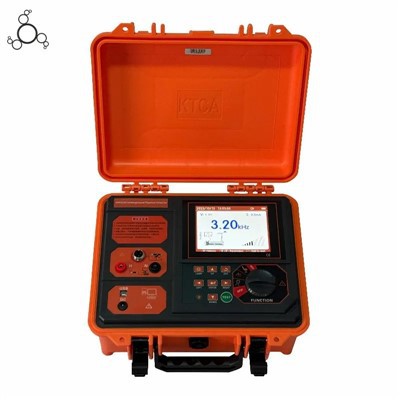
If you’re ready to stop guessing and start working safely, reach out to our team to chat through your high voltage testing needs. No pushy sales calls, no confusing fine print—just straight talk about what tools will actually get the job done.
Circuit Breaker Tester References
- Westinghouse Electric Corporation. (2018). High Voltage Test Procedures for Three-Phase Rotation Verification. Electrical Maintenance Journal.
- International Electrotechnical Commission (IEC). (2021). IEC 61010-2-031: Safety Requirements for Electrical Equipment for Measurement, Control, and Laboratory Use – Part 2-031: Particular Requirements for High Voltage Test and Measuring Equipment.
- National Electrical Manufacturers Association (NEMA). (2020). Standard for Phase Rotation Testing in Industrial Three-Phase Systems. NEMA Publication No. ICS 2-2020.
Wuhan Jiuhua Jingce Power Equipment Co., Ltd.
As one of the most experienced high voltage tester manufacturers in China, we offer a wide range of products with superior quality. Please feel free to wholesale bulk durable high voltage tester from our factory. For price consultation, contact us.
Address: 601,Unit 1,Building D4-02,Optics Valley Center,303 OpticsValley Avenue,Wuhan
E-mail: market@wuhanjhjc.com
WebSite: https://www.powertransformertester.com/
