Hey everyone, if you’ve ever wondered what keeps your car’s wheels from doing weird, wobbly things when you hit a pothole or gun it off a stoplight, let’s talk torque arms. As someone who’s been in the automotive chassis parts game for years—designing, making, and shipping these bad boys to shops and factories all over the globe—I get that most drivers don’t notice torque arms until they’re broken. That’s exactly why I’m here to break this down like we’re chatting over a coffee (or a iced latte, no judgment). Automotive Chassis Parts
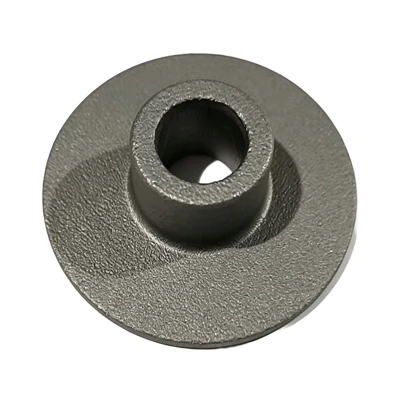
First off, let’s keep it real: the chassis is like the skeleton of your car, right? Every part there has a job, not just for performance but for safety. Torque arms (sometimes people call them torque rods, for the lazy crew) are small but mighty. Let’s start with the basics of what torque even means here. When your car’s engine sends power to the wheels, that’s torque—twisting force that moves the car forward or backward. But if there was nothing to counteract that twist, chaos would happen. Let’s take a rear-wheel-drive truck as an example. If you press the gas hard, the rear axle wants to twist backward. Without a torque arm, that twist would lift the front of the wheel (hello, wheel hop!) or even yank the axle out of place. Yeah, not ideal. That’s the core function: counteracting torque that other suspension parts can’t handle.
Wait, let’s get specific so this isn’t just jargon. Most suspension setups, whether it’s a solid rear axle (super common in trucks, SUVs, and some old-school cars) or even some independent rear suspensions, use control arms to hold the axle in place. Control arms handle up-and-down movement—they let the wheel bounce over bumps, but they’re not built to take that twisting torque from the powertrain. That’s where the torque arm comes in. It’s a rigid, usually metal bar (sometimes forged, sometimes welded, depending on the application) that connects the axle housing to a fixed point on the chassis—like the frame or the differential mount. When the axle tries to twist, the torque arm pulls (or pushes, depending on direction) against that fixed point, stopping the twist dead in its tracks.
Let’s use a daily driver car to make this relatable. If you drive a front-wheel-drive sedan, you might not think you have a torque arm, but a lot of modern ones do, especially if they have a sport-tuned suspension. Front-wheel-drive cars have torque too—when you accelerate hard, the transaxle twists, and that can cause torque steer, which is when the steering wheel tugs to one side without you touching it. A torque arm here ties the transaxle to the chassis, keeping that twist in check, so your steering stays straight when you floor it. No more jerky, annoying tugs that make you clutch the wheel tighter.
Now, let’s talk about wheel hop, because that’s a big one for performance folks. Wheel hop is when the tires lose traction, spin, then grab again, over and over—like a bouncing wheel. It’s super bad for acceleration, and it wears out tires and suspension parts fast. Torque arms eliminate most wheel hop by keeping the axle aligned perfectly under torque. Without it, the axle can shift backward under acceleration, making the tire slip, then snap back when the grip comes back. Been there, fixed that—we’ve replaced so many worn-out torque arms on truck owners who were sick of their rigs hopping at stoplights. It’s a small part, but it fixes a huge headache.
Wait, but torque arms aren’t just for acceleration. What about braking? When you hit the brakes hard, your car wants to pitch forward—this is called brake dive. But the chassis also twists during braking, right? The front end squats down, and the rear end lifts a tiny bit. A torque arm (especially on rear axles) helps control that rear movement. It stops the axle from rotating backward when you brake, so the rear end doesn’t lift too much, which keeps your handling stable. Ever noticed how some performance cars feel way more planted when braking? That’s partly the torque arm doing its job.
Let’s get into what makes a good torque arm, because as a supplier, I’ll be honest: not all torque arms are created equal. You’ve got budget ones that are stamped thin metal—those bend after a few hard hits. Then you’ve got the ones we make: forged steel with reinforced mounting points, designed to handle the max torque your car’s powertrain puts out. We test every batch in our in-house lab—we hook them up to torque machines that simulate thousands of hard accelerations and brake stops, make sure they don’t crack or bend. Why does that matter? If a torque arm breaks, suddenly the axle is free to twist. For a truck, that can mean the wheel shifts, hits the body, or worse, the axle comes loose on the highway. Safety first, always.
Also, torque arms aren’t one-size-fits-all. That’s a mistake a lot of small shops make—they grab a random torque arm from a parts store that “looks similar” to the old one. Nope. A torque arm for a 1500-series pickup is way different than one for a 3500-series work truck, because the 3500 has way more torque. Even within the same model, if you put a supercharger on your car, you need a heavier-duty torque arm. We spend a lot of time matching our torque arms to specific vehicle applications because we know cutting corners here leads to big problems.
Wait, let’s clear up a common mix-up with panhard rods. A lot of people confuse torque arms with panhard rods. Panhard rods are for side-to-side axle movement—they keep the axle from sliding left or right. Torque arms are for forward/backward twist. They work together, but they do totally different jobs. That’s a question we get all the time when customers call in—they say “my panhard rod is loose” but it’s actually their torque arm. I make a point to explain that over the phone, because misidentifying the part leads to wrong replacements, which no one wants.
Another use case: race cars. When you’re at the track, every pound of weight counts, and every bit of control matters. Torque arms in race cars are often lightweight aluminum (still rigid, though) to cut unsprung weight, which makes the suspension react faster. They’re also adjustable—so the team can tweak the axle alignment for different track conditions. We supply torque arms to a lot of local race teams, and they tell us the difference is night and day—better traction, faster lap times, fewer breakdowns mid-race. It’s not just a daily driver part; it’s a performance game-changer.
Now, let’s talk about wear and tear. Torque arms don’t last forever, obviously. They take a beating from potholes, curbs, hard launches, even off-roading. The mounting bushings (the rubber or polyurethane parts at the ends) wear out first. When bushings go bad, you get play—wiggle in the torque arm. Signs to look out for: a clunking noise when you accelerate or brake, steering wheel tugging, vague handling, or even uneven tire wear. If you notice any of that, don’t wait. A worn torque arm can mess up your whole suspension alignment, leading to more expensive repairs down the line. We stock replacement torque arms and bushings for all the common vehicles, so you don’t have to wait around.
As someone who’s in the automotive chassis parts business, I love that torque arms are a perfect example of how small, underrated parts are critical to a car’s function. You don’t see them when you pop the hood, but they’re right there, working every time you hit the gas, brake, or go over a bump. We don’t just sell parts—we make parts that keep cars safe, reliable, and performing how they should.
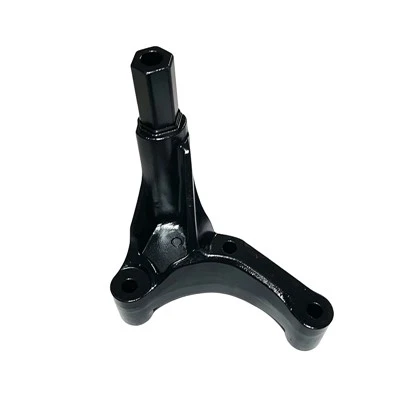
If you’re a mechanic, a car owner needing a replacement, a race team looking for heavy-duty parts, or someone just curious about chassis components, hit us up to chat. We can help you find the right torque arm for your vehicle, answer any questions, or even talk custom builds if you’re modifying your ride. No sales pitches here—just honest info and parts that work.
Automotive Chassis Parts References
- Automotive Suspension Systems: Design, Function, and Performance. SAE International, 2019.
- Chassis Engineering for High-Performance Vehicles. HP Books, 2021.
- “Torque Loads in Solid Axle Suspensions.” Journal of Automotive Engineering, Vol. 232, No. 12, 2018, pp. 1678-1689.
Ninghai Zhengda Moulding Co., Ltd.
As one of the most professional automotive chassis parts manufacturers and suppliers in China, we also support customized service. Please feel free to wholesale durable automotive chassis parts in stock here from our factory. Welcome to contact us for pricelist.
Address: No.2088-3, Xuemian North Road, Taoyuan Subdistrict, Ninghai County
E-mail: xgs9425@outlook.com
WebSite: https://www.cn-zhengda.com/
