Hey everyone, let’s cut to the chase – if you’ve ever grabbed a pack of water bottles, a case of soda, or a grocery haul and noticed that those plastic carry handles you rely on look a little different than they did when you first got them, you’re not crazy. As someone who’s been deep in the plastic carry handle game for over a decade, I get so many questions from customers asking, “Do these things actually fade over time? And if so, why should I care?” Today I’m breaking this down, no fancy jargon, just real talk from a supplier who sees these handles every single day. Plastic Carry Handle
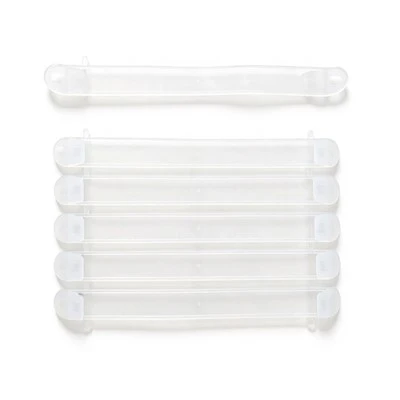
First off, let’s define what we’re even talking about here. The plastic carry handles you see on product packaging are almost always made from polypropylene (PP) – that’s the most common plastic for this exact use case, because it’s durable, flexible enough to bend without breaking, and cheap enough to mass produce for big brands. Sometimes you’ll find others like polyethylene (PE) for really lightweight stuff, but PP is the workhorse. Now, fading here isn’t just “looks a little less bright” – we’re talking about that gradual shift from, say, a bold red to a pale pink, or a sunny yellow to a dull off-white, that happens when the handle is exposed to stuff that messes with its molecular structure.
So yeah, plastic carry handles do fade over time. But the rate? That’s where it gets interesting, because it’s not one-size-fits-all. Let’s start with the biggest culprit: UV radiation from the sun. I can’t tell you how many times I’ve talked to a customer who puts their product out on pallets outside for weeks before shipping, only to get a call saying the handles look washed out. UV rays break down the additives we put into the plastic – specifically, the color pigments that give the handle its hue. Those pigments are designed to absorb light, but when they absorb too much UV (which is super intense, especially if the product is sitting in a warehouse without shade or getting moved around in transport that’s out in the open), they start to break down. It’s not that the color just wears off – the molecules literally fall apart, so there’s nothing left to reflect that bright color.
Wait, but what about handles that never see the sun? Like the ones on a grocery bag that’s stored in a closet for months, or a product that’s sitting on a shelf in a dark warehouse? Do they fade too? Honestly? Sometimes, just way slower. The other big fade triggers are things like heat, humidity, and even certain chemicals. For example, if a handle comes into contact with harsh cleaning chemicals, or even the grease from food packaging (think: a handle on a takeout container that gets splattered with oil from fries), that can eat at the pigments too. And extreme heat – like a car trunk in the middle of summer, where temps can hit 150°F – will speed up that breakdown process so much. I’ve seen handles that were stored in a hot distribution center for 6 months go from neon green to a washed-out lime, while the exact same batch stored in a cool, dry office still looks brand new two years later.
Here’s the thing that most people don’t realize: not all plastic carry handles are made the same, so their fade resistance varies like crazy. At our company, we work with brands big and small, and one of the first things we talk about when a customer is placing an order is their product’s end-use environment. If you’re selling a beverage that’s going to be displayed outdoors at a farmers market, we’re not just making a basic handle – we add UV stabilizers to the mix, along with fade-resistant pigments that are specifically formulated to stand up to sun exposure. For products that are going to be stored indoors for long periods, we can dial back those additives to keep costs down, which makes total sense. But some cut-rate suppliers skip that step entirely, slapping a cheap pigment into the plastic and calling it a day. Those handles will fade in weeks, not years, and that’s a problem for the brand’s image – no one wants to buy a soda pack where the handle is already pale before they even take it home.
I got a text from a customer last year that summed this up perfectly. They were a craft brewery that ships their beer in 6-packs with our handles, and they noticed that during the summer months, the handles on beer that sat on store shelves for a month looked way duller than the ones sold in the winter. We looked at their order – they hadn’t requested any special UV additives because they thought “beer is stored inside, right?” Turns out, some of the small convenience stores they sold to kept their beer coolers outside, with the handles getting direct sun all day. We adjusted their next order to include UV stabilizers, and they emailed me a few months later saying the difference was night and day. That’s the kind of real, on-the-ground stuff you don’t get from a textbook – that’s what comes from being a supplier, talking to customers every day, and seeing these exact issues play out.
Now, let’s get into what fading actually means for you, depending on who you are. If you’re a brand owner, fading isn’t just a cosmetic issue – it’s a brand identity issue. Think about it: if your product’s packaging color is instantly recognizable, and the handle fades to a different shade, suddenly it’s harder for customers to pick your product off the shelf. Even worse, some customers might think the product is old or expired if the handle looks dull. I’ve had a few brand clients mention that they lost small sales because shoppers thought their 6-packs were overstock or old, all because the handles faded too fast.
If you’re a consumer, this stuff matters too, especially if you reuse those plastic handles. How many people have repurposed a plastic carry handle to hang tools, plant pots, or kid’s toys? A handle that fades isn’t just “ugly” – it might have lost some of its structural integrity too. When plastic breaks down from UV or heat, it becomes brittle. So that bright red handle you used to carry groceries might snap while you’re hauling laundry a year later, because the molecular bonds got weak from fading. It’s not a direct cause, but they’re linked – the same additives that prevent fading also help keep the plastic flexible.
Wait, but can you stop plastic carry handles from fading? The short answer is: you can slow it down a ton, and that’s what we specialize in. Let’s get into the actionable stuff, because no one wants to just hear “it fades.” First, if you’re a brand, talk to your handle supplier about your product’s end environment. If it’s going outdoors, ask for UV stabilizers and fade-resistant pigments. If it’s going to be stored in a cool, dry space, you can go with standard formulations to save money. Second, store products away from direct sunlight and extreme heat during shipping and storage. Pallets out in the sun for weeks aren’t just fading handles – they can mess up the whole product. Third, if you’re a consumer, don’t leave the plastic handles (or the packaging they’re attached to) in direct sun or hot areas for long periods. Storing your grocery haul in the fridge after unloading, instead of leaving it in the kitchen window, will make those handles last way longer.
I should also address a common myth here: some people think that all plastic carry handles are going to fade eventually, so it doesn’t matter. Yeah, eventually all plastic will degrade a little, but that timeline can be anywhere from a few months to a decade, depending on the materials. A high-quality PP handle with UV additives can look like new for 5+ years even if it’s in direct sun, while a cheap, unmodified handle will fade in 2 months. That’s a huge difference, and it’s all about the decisions we make as suppliers when we formulate the product.
Let me throw in a quick example from our work. A few months ago, we did a batch of handles for a national snack brand that sells their chips at gas stations and convenience stores – so the packaging is often sitting on outdoor display racks, exposed to sun all day. The brand asked for their signature blue handle, and we added a specific fade-resistant blue pigment along with UV stabilizers that are tested to hold up for 18 months of outdoor exposure. The customer was worried about cost, but we broke it down for them: replacing faded handles on returned products, or losing customers because their packaging looked dull, was way more expensive than the tiny extra cost for those additives. That’s the kind of balance we strike every day – making handles that work for the brand’s needs, not just the cheapest possible.
Another thing I see all the time: people confuse fading with discoloration from other sources, like mold or dirt. If your handle looks gray or spotty, that’s not fading – that’s just gunk buildup, which is easy to wipe off. Fading is a uniform shift in color, across the whole handle, that you can’t buff or clean away. I had a customer once send me a photo of a handle that looked spotty, complaining it faded, and it was just a dirty handle from being in a dusty warehouse. We had a good laugh, told them to just wipe it down, and they came back a few months later to order more handles, knowing they could reach out for help with these kinds of questions.
So, circling back to the original question: do plastic carry handles fade over time? The honest answer is yes, but not always as much or as fast as you might think – and the big factors are how they’re made, what they’re exposed to, and how they’re stored. As a supplier, my job isn’t just to send you plastic handles that hold your product – it’s to make sure they look good when your customer takes them home, and last as long as they need to.
Handle Buckles If you’re a brand looking for reliable plastic carry handles that don’t fade before their time, or if you have questions about what formulation works for your product, hit us up to chat. We don’t do cookie-cutter solutions, and we’re always happy to walk through options that fit your budget and your product’s needs. Whether you need a small batch for a local brand or a huge order for a national retailer, we’ve got you covered.
References
- L. L. Wood, "Understanding Polymer Degradation and Stabilization," Plastics Engineering, vol. 72, no. 3, pp. 34-39, 2016.
- S. K. De, "UV Degradation of Polypropylene Pigmented with Organic Dyes," Journal of Applied Polymer Science, vol. 111, no. 4, pp. 1892-1898, 2009.
- American Packaging Association, "Material Considerations for Retail Packaging Handles," Packaging Today, vol. 45, no. 8, pp. 22-25, 2020.
Tengzhou Fujin Plastic Products Co., Ltd.
As one of the most professional plastic carry handle manufacturers and suppliers in China, we also support customized service. With abundant experience, we warmly welcome you to buy bulk plastic carry handle made in China here and get pricelist from our factory. For price consultation, contact us.
Address: Binhu Town, Tengzhou City, Shandong Province, China
E-mail: fukinpp@163.com
WebSite: https://www.tzfujin.com/
