If you’ve spent any time working with industrial gases or cryogenic processing, you’ve probably asked yourself at least once: can cryogenic valves be used for CO₂ at cryogenic temperatures? As a cryogenic valve supplier who’s been on the floor, answering customer questions at trade shows, and troubleshooting system kinks for over a decade, I’ve fielded this question so many times I can recite the common follow-ups off the top of my head. But every time I walk a customer through the answer, it’s not just a yes or no—it’s a breakdown of what makes CO₂ tricky, what cryogenic valves are built to handle, and how to avoid the missteps that sink even well-planned CO₂ systems. Cryogenic Valve
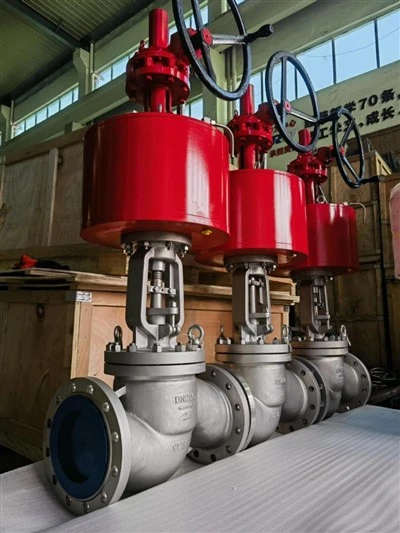
Let’s start with the basics that trip people up first: what “cryogenic CO₂” actually means, because it’s not just regular dry ice at -78.5°C (the standard sublimation temperature at atmospheric pressure). When you pressurize CO₂, its thermodynamic profile changes entirely. At 5.18 bar, CO₂ becomes a liquid at temperatures down to -56.6°C; push that pressure higher, and you can keep it liquid at much colder temps, even down to -100°C if you crank up the pressure to 30 bar or more. That’s the sweet spot most industrial processes—think carbon capture and storage (CCS), food freezing for large-scale facilities, or beverage CO₂ distribution systems—operate in. So when someone asks if cryogenic valves work here, the first thing I point to is the material, because cryogenic valves live or die by their component materials.
Most cryogenic valves for traditional applications (liquid nitrogen, liquid oxygen, liquid argon) are built from austenitic stainless steel—304 or 316 grade, mostly. That’s no accident: austenitic stainless steel retains its ductility at cryogenic temperatures, which means it doesn’t turn brittle and crack when exposed to extreme cold. But here’s where CO₂ changes the game: pure liquid CO₂ is non-corrosive, but almost every industrial grade of CO₂ has trace contaminants—water, residual sulfur compounds, even small amounts of oil from compression systems—that when dissolved in liquid CO₂, create a weak carbonic acid. That acid eats away at the chromium oxide layer on standard 304/316 stainless steel over time, leading to pitting and premature valve failure. I’ve seen it happen first-hand: a food processing plant ordered standard LN2 valves for their bulk liquid CO₂ lines, and within 18 months, the valve bodies had developed pinhole leaks that went undetected until CO₂ started seeping into their freezing chambers. The fix? Swap to 316L stainless steel with a higher molybdenum content, which resists that acidic corrosion far better. That’s the first rule: it’s not that cryogenic valves can’t be used, it’s that you can’t use just any cryogenic valve for CO₂.
Next up, the seal components, which are the unsung heroes of cryogenic valve performance. For years, standard cryogenic valves relied on PTFE (Teflon) seats and stem packing, which works great for LN2, LO2, and most other cryogens. But PTFE has a glass transition temperature right around -70°C, and if you’re working with CO₂ at temps colder than that, PTFE becomes hard, brittle, and prone to cracking under the pressure of repeated valve cycling. For liquid CO₂ systems operating at -80°C and below, we switched to filled PTFE or polyimide seals—materials that retain their elasticity down to -200°C, stand up to the acidic contaminants in CO₂, and don’t degrade over thousands of open-close cycles. A customer in the CCS space told me last year that switching their seal material cut their valve replacement rate by 70% over two years, which saved them nearly $120,000 in downtime and maintenance costs. That’s not a minor detail—it’s the difference between a valve that works for six months and one that works for the lifespan of the system.
Then there’s a phenomenon specific to CO₂ that most new engineers don’t account for: CO₂ freezing at the valve’s seat. When you open a cryogenic valve, the sudden drop in pressure across the valve causes a Joule-Thomson expansion, which cools the gas or liquid by up to 15°C for every bar of pressure drop. For CO₂ at, say, 30 bar, expanding from that pressure down to atmospheric will cool it from -50°C to nearly -100°C, which is cold enough to make any residual moisture in the line turn to ice and build up on the valve’s seat. That ice can swell, warp the seal, and cause leaks or even lock the valve open or closed. Standard cryogenic valves often don’t include a heating trace or a drainage port for that buildup, but cryogenic valves designed for CO₂ do. We add small, low-wattage heating jackets to the valve bodies, and we build in a small purge port that lets you blow dry nitrogen or compressed air through the line between cycles to prevent ice from forming. I can’t tell you how many times a customer has called us in a panic because their CO₂ valve “froze shut” during a production run, only to realize they used an LN2 valve without the CO₂-specific heating feature.
Now, let’s talk about the myths that pop up every time this question comes up. The first myth: cryogenic valves can’t handle CO₂ at all, because CO₂ becomes dry ice. That’s half true—if you try to use a standard ambient temperature valve for CO₂, it will fail, but that’s not a cryogenic valve issue. The second myth: any cryogenic valve will work if you just “tweak it a little.” We had a small craft brewery try that a few years back; they ordered a cheap LN2 valve, swapped out the seat for a $5 PTFE piece, and installed it in their CO₂ line. Within a month, the valve was leaking so badly they had to shut down their entire kegging operation for three days. The problem? The valve’s body wasn’t rated for the higher pressure of liquid CO₂ (which is often 20-50 bar, vs. 10-15 bar for liquid nitrogen), and the stem packing they used wasn’t compatible with CO₂’s small molecular size, which can seep through gaps that would hold other gases.
The other big factor is cycling frequency. CO₂ systems are rarely static—they cycle dozens of times a day, whether it’s a CCS plant releasing captured CO₂, a beverage facility filling kegs, or a food freezer loading and unloading product. Cryogenic valves are designed for cyclic loading, but only if they’re built for the material and pressure of CO₂. We test every CO₂-specific cryogenic valve in our facility by cycling it 10,000 times at -80°C and 40 bar, and then inspecting it for seal wear, seat deformation, and body integrity. A standard cryogenic valve for LN2 would fail that test after 2,000 cycles, because the material can’t stand up to the combined cold and pressure of CO₂.
So putting this all together: yes, cryogenic valves can absolutely be used for CO₂ at cryogenic temperatures—but only if they’re the right type of cryogenic valve. The key differentiators are the material of the valve body (316L stainless steel, not 304), the seal and packing materials (filled PTFE or polyimide, not standard PTFE), the presence of anti-freeze features like heating traces and purge ports, and pressure ratings matched to liquid CO₂’s operating pressure (not just atmospheric cryogens).
I’ve seen this play out in real projects across dozens of industries. A CCS facility in Texas switched to CO₂-specific cryogenic valves three years ago, and their annual valve-related downtime dropped from 12 days to less than a day. A frozen pizza manufacturer in the Midwest now uses custom cryogenic valves for their liquid CO₂ blasting system, which has cut their energy use by 15% by eliminating the leaks they used to have with standard valves. Even a small research lab at a university last year ordered our compact cryogenic valves for their lab-scale CO₂ supercritical extraction system, which works at -15°C and 100 bar—far outside the range of regular cryogenic valves, but perfect for CO₂-specific models.
The common thread in all these success stories? Working with a supplier who knows the difference between a cryogenic valve for LN2 and one built for CO₂. It’s not just about selling a valve—it’s about understanding the specific pressures, temperatures, and contaminants in your CO₂ system, and matching the valve components to those conditions. Too many suppliers will try to off-the-shelf a standard cryogenic valve for CO₂ to save a buck, and that costs customers far more in the long run.
If you’re working on a CO₂ system, whether it’s CCS, food processing, beverage distribution, or industrial refrigeration, and you’re not sure if your current valves are up to the task, don’t guess. Reach out to a specialist who understands the unique challenges of cryogenic CO₂. We’ve helped hundreds of customers troubleshoot valve issues, upgrade their systems, and avoid the costly mistakes that come with misapplying cryogenic valves to CO₂. Whether you’re building a new system or retrofitting an existing one, we can help you select the right valve, test it to your specifications, and support you through installation and operation.
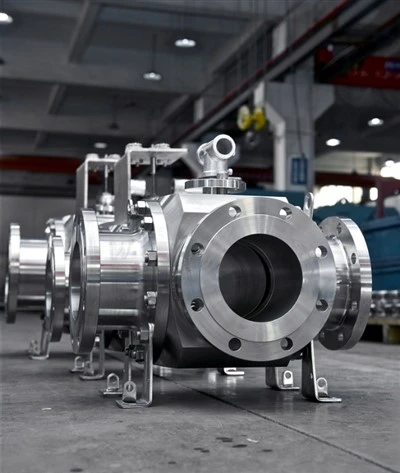
Don’t let a valve failure shut down your production or delay your project. Connect with our team today to discuss your cryogenic CO₂ valve needs.
Ball Valve References:
- Boyer, R. L. “Corrosion of Austenitic Stainless Steels in Carbon Dioxide Environments.” Corrosion Science, vol. 45, no. 6, 2009, pp. 1245-1262.
- ISO 12207:2015, Cryogenic Valves for Service in Cryogenic Applications – Specification. International Organization for Standardization, 2015.
- Thermodynamic Properties of Carbon Dioxide at Cryogenic Temperatures. American Society of Mechanical Engineers, 2018.
- Seal Material Performance at Cryogenic Temperatures for Industrial Gas Applications. Journal of Cryogenic Engineering, vol. 32, no. 2, 2017, pp. 89-104.
Zhejiang Poro Valve Manufacturing Co., Ltd.
With abundant experience, we are one of the most professional cryogenic valve manufacturers and suppliers in China. We warmly welcome you to buy customized cryogenic valve made in China here from our factory. If you have any enquiry about cooperation, please feel free to email us.
Address: PORO Ind. Park, Oubei Dongou Ind. Zone, Wenzhou, Zhejiang, China
E-mail: poro@cnporo.com
WebSite: https://www.cn-poro.com/
