If you’ve ever stood on a construction site waiting months for a modular structure to arrive, or squinted at a cheap flat-pack container house that warped after the first rain, you know how frustrating it is to pick the wrong prefab container house manufacturer. As someone who’s been in this space for nearly 12 years—first installing units for small business owners and contractors, now leading our team as a supplier—I’ve seen every bad call imaginable: factories that cut corners on steel gauge, clients stuck with suppliers who vanished mid-delivery, and structures that couldn’t hold up to a single hurricane or long, cold winter. Choosing the right prefab manufacturer isn’t just about getting a box for cheap—it’s about investing in something that works for years, stays on budget, and doesn’t turn into a headache halfway through your project. Prefab Container House
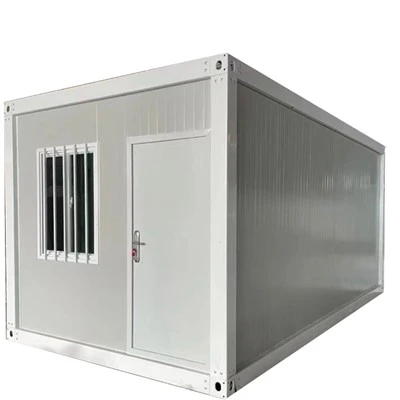
Let’s break down what actually matters, not the flashy marketing lines you’ll see on every manufacturer’s website.
First, stop judging by price alone. That $5,000 “container house” listed online sounds like a steal, but here’s the catch: most of these use corrugated steel that’s 14-gauge instead of the 12-gauge recommended for structural use in residential or commercial spaces. 14-gauge steel is thin enough that a stray forklift bump can leave a dent, and it rusts in 2-3 years, not the 10+ you’d expect. I’ve had clients reach out to us after buying those cheap units—they’ve had to spend $3,000 on repairs just to make it livable, and they still don’t have the insulation or structural integrity to pass a local building code inspection.
A good rule of thumb: if a manufacturer’s price is 20% lower than the average for a similar-sized unit, it’s likely they’re cutting corners on materials. We always quote our clients based on material costs first—steel, insulation, windows, and doors that meet local standards. We don’t mark up for fancy photoshoots or sales hype; we price for the quality that keeps the unit standing.
Next, dig into their manufacturing process and in-house capabilities, not just what they outsource. Too many prefab manufacturers act as middlemen: they source containers from a third-party depot, hire a local welder to do the modifications, and then ship the finished product to you. That means no consistency in build quality, no way to trace who did the work, and no recourse if something goes wrong.
We keep 90% of our manufacturing in-house. Our team of engineers designs the units to meet local wind load and snow load requirements (we test every design for areas that get 100+ mph winds or 4 feet of snow), our welders are certified by the American Welding Society, and we have a full quality control team that checks every unit three times—once after cutting the steel, once after insulation and modifications, and once before it leaves our yard. We even have a full assembly bay where we build out the entire unit (including plumbing and electrical) before disconnecting it for transport, so you can see exactly what you’re getting before it ships. That’s a huge difference from a manufacturer that only shows you renderings, not a physical prototype.
Then, check their track record for compliance and building codes, this is non-negotiable. A container house isn’t just a storage shed—it needs to meet local building codes if you’re using it as a permanent residence, office, or retail space. A lot of small manufacturers will tell you their units are “code-compliant” when they’ve only met basic international standards that don’t apply to your area. For example, if you’re building in Florida, you need units that meet Miami-Dade wind codes; if you’re in Colorado, you need insulation that meets energy code requirements for extreme cold.
We work with clients across 12 states, and for every project, we provide a full set of engineering drawings, material test reports, and code compliance documentation tailored to their location. We’ve had clients from Texas to New York come to us after buying units that failed inspection because the manufacturer skipped on structural bracing or didn’t install fire-resistant wallboard. If a manufacturer can’t or won’t provide third-party code verification, walk away—no exceptions.
Ask about customization and adaptability. One size doesn’t fit all when it comes to container houses. Maybe you need a 40-foot unit split into a home office and a guest room; maybe you want to add a second story, solar panels, or a retail storefront with large display windows. A good manufacturer shouldn’t treat your request as an afterthought—they should have a design team that works with you from the start, and a track record of pulling off complex custom projects.
Last year, we worked with a small brewery in Portland that wanted a container taproom built to fit a narrow lot between two historic buildings. Most manufacturers told them a 20-foot unit was all they could work with, but our design team modified a 40-foot unit with custom end walls, reinforced for pedestrian traffic, and added a fold-up patio that fit perfectly in their space. We also handled all the electrical and plumbing hookups, so they didn’t have to coordinate with three different contractors. If a manufacturer says “we only do standard units” or charges exorbitant fees for small custom changes, that’s a sign they don’t prioritize your specific needs.
Now, what about after-sales support? Prefab containers don’t just get built and shipped—you might need help with installation, plumbing issues, or even small modifications down the line. A manufacturer that vanishes once they get paid is the worst-case scenario. We offer a 10-year structural warranty on all our units, and a 1-year warranty on all interior finishes and mechanical parts. We also have a dedicated support team that can walk you through installation over the phone, or send a local technician to your site for repairs if needed. Last month, a client in Chicago called us with a minor leak around a window—our team had a part shipped out and fixed it in 24 hours, no extra charge under warranty. If a manufacturer only offers a 1-year warranty at most, or doesn’t have a clear way to contact them after delivery, that’s a red flag.
I also always recommend asking for client references—specifically, ask to talk to someone who had a project similar to yours. A lot of manufacturers will give you a reference for a big corporate job, but they won’t give you one for a small family building a home in a rural area. When clients ask for references, I put them in touch with at least three recent clients, and I encourage them to ask questions like: Did the manufacturer stick to the timeline? Did they hide any extra fees? Was the unit exactly as described? I’ve had clients tell me horror stories where a manufacturer quoted a price, then added $10,000 in “shipping fees” or “custom modification fees” halfway through—so get all costs in writing before you sign a contract.
Something else most people overlook: their supply chain transparency. Where are they getting their steel? Are their windows and doors from trusted brands? A lot of cheap manufacturers use imported steel that doesn’t meet U.S. quality standards, or windows that warp in extreme temperatures. We source our steel from a domestic mill that’s certified for structural use, and all our windows and doors are from manufacturers that meet Energy Star requirements. We share all our supplier information with clients, so they know exactly what’s going into their unit.
Let’s also talk about red flags to watch for. If a manufacturer pressures you to sign a large deposit immediately, that’s a bad sign. Legitimate manufacturers will let you visit their facility to see their work, and they won’t rush you into a decision. If their website only has stock photos and no real client photos, that’s another red flag. Any good supplier will have a portfolio of actual projects, not just professional renderings.
At the end of the day, choosing the right prefab container house manufacturer is about trust. You’re investing in a structure that will be part of your life or business for years, so you need someone who will stand behind that product. I’ve worked with too many clients who regretted cutting corners to save a few thousand dollars, and I’ve worked with even more who found a manufacturer that listened to them, delivered on time, and built something that exceeded their expectations.

If you’re in the market for a prefab container house—whether it’s a home, office, retail space, or something else—we’d love to help. Our team can walk you through every step: design, material selection, code compliance, and delivery. We’ll answer all your questions, provide references, and give you a detailed, no-hidden-fee quote tailored to your project. Don’t settle for a manufacturer that cuts corners or disappears after delivery—reach out today to talk through your needs and see how we can help you get the right container house for your project.
Folding House References
- International Code Council. (2021). International Residential Code for One- and Two-Family Dwellings.
- American Welding Society. (2020). Structural Welding Code – Steel (AWS D1.1/D1.1M).
- National Association of Home Builders. (2022). Modular and Prefabricated Home Construction Standards.
- Steel Tank Institute/Steel Plate Fabricators Association. (2021). Structural Steel Specifications for Prefabricated Buildings.
- Energy Star. (2023. Energy Efficient Product Standards for Windows and Doors.
Jiangsu Suqian Longze Modular Construction Co., Ltd.
As one of the most professional prefab container house manufacturers and suppliers in China, our products have good reputation in the market. Please feel free to buy high quality prefab container house at competitive price from our factory. We also accept customized orders.
Address: No. 8, Weisan Road, Shuanggou Town, Sihong County, Suqian City, Jiangsu Province, China
E-mail: Lzmk88888888@163.com
WebSite: https://www.expandablehousefactory.com/
