If you’ve ever found yourself lying awake at 3 a.m., scratching an unfamiliar bite on your arm and wondering, is this a bed bug?, you’re not alone. Bed bug infestations have surged over the past two decades, driven by increased global travel, stricter pesticide regulations, and the simple fact that these tiny, nocturnal hitchhikers are experts at hiding in luggage, used furniture, and even grocery bags. As a mattress protector supplier with nearly 10 years in the business, I get more questions about bed bugs than I do about waterproofing or stain resistance—two of the other big selling points for our products. The most common one? Can a mattress protector actually prevent bed bugs? Mattress Protector
The short answer isn’t as simple as yes or no. It depends on what you mean by “prevent,” and not all mattress protectors are built the same. Let’s break this down by what bed bugs need to survive, how mattress protectors work, and the real-world science behind whether they can stop an infestation before it starts.
First, let’s get clear on bed bug biology. Cimex lectularius, the common bed bug, is a small, flat, wingless insect that feeds exclusively on blood, usually human. They only need three things to thrive: easy access to a blood meal (that’s you, while you sleep), small, narrow hiding spots near their food source, and a way to hitch a ride to new locations. That last part is how most infestations start: someone stays in a hotel, brings home a suitcase with a bed bug hiding in a seam, or buys a used couch that has a colony. Once they’re in your home, they don’t just live on your mattress—they spread to box springs, bed frames, headboards, even the cracks in your wall outlets.
Now, a standard mattress protector—you know, the thin, stretchy fabric cover you toss on to keep dust off your mattress—won’t do much against bed bugs. Those usually have loose seams, porous fabric, and no barrier to keep bugs out or trapped inside. But the protectors we specialize in are labeled “bed bug-proof,” and that’s a key distinction. These aren’t the cheap, off-the-shelf options you pick up at the grocery store. They’re made with tightly woven, non-porous material (usually a blend of polyester and polyurethane, or even coated cotton) that bed bugs can’t chew through or squeeze through. Adult bed bugs are about the size of an apple seed, but newly hatched nymphs are tiny—only about 1 millimeter long, roughly the size of a pinhead. A good bed bug-proof protector has gaps smaller than that, so even baby bed bugs can’t slip through.
Here’s where a lot of people get confused: a bed bug-proof protector isn’t going to stop a bed bug from getting into your bedroom in the first place. If a hitchhiker crawls out of your suitcase and onto your floor, it can still make its way to your bed. What it will do is create a barrier that keeps bed bugs from hiding in your mattress and box spring. That’s a huge part of prevention, because once bed bugs set up shop in your mattress, they’re almost impossible to get rid of without professional treatment. They lay hundreds of eggs there, and their entire life cycle (from nymph to adult, which takes just a month) happens within the tight, dark seams of a mattress. If you wrap your mattress and box spring in a bed bug-proof protector, you’re eliminating that prime hiding spot. The bugs can’t burrow into the fabric to lay eggs or take shelter during the day, so they’re forced to stay exposed, which makes them much easier to spot and eliminate before they can spread.
I’ve seen this play out first-hand with our own customers. A few years back, a family from Chicago reached out after a hotel stay left them with bed bugs in their old apartment. They’d tried heat treatments, which are effective for killing bed bugs, but the bugs kept coming back—they were hiding in the box spring, which they hadn’t covered. We sent them two queen-size bed bug-proof protectors, and a few months later, they told us they hadn’t seen a single new bite. The existing bugs that were already in the mattress were trapped inside the protector, so they couldn’t get out to feed. After about six months, those bugs starved to death without a blood meal. That’s a key point: a quality bed bug protector doesn’t just keep new bugs out—it can also kill an existing small infestation by trapping the bugs inside, cutting off their food source.
But let’s be honest about the limits here. If you already have a full-blown infestation, a mattress protector alone isn’t going to solve your problem. It can stop the spread from your mattress to other parts of your bed, but you’ll still need to hire a pest control professional, wash all your bedding on high heat, and check every piece of furniture in your bedroom to make sure you don’t miss a colony. I always tell customers: a bed bug protector is a proactive tool, not a cure-all for an existing infestation.
So, when is it a good investment? Let’s say you’re a frequent traveler, or you live in an apartment building or dorm where bed bugs are common. Those are high-risk environments. In those cases, a bed bug-proof protector is a smart first line of defense. I recommend pairing it with regular inspections: once a week, pull back your sheets and check the seams of your mattress, the headboard, and the area around your bed legs for tiny, rust-colored spots (that’s bed bug excrement) or shed skins. If you catch a couple of bugs early, a protector can keep them from spreading while you treat the issue.
Another thing to consider: not all “bed bug-proof” claims are created equal. Some brands will slap that label on a regular protector just to charge more. How do you tell the difference? Look for third-party testing. Our protectors, for example, are tested by entomologists to meet ASTM International standards for bed bug resistance. That means they can withstand exposure to both adult and nymph bed bugs for 120 hours without any bugs being able to penetrate the fabric. It’s not just a marketing buzzword—it’s a measurable standard that tells you the product will actually work.
I’ve talked to a lot of customers who were skeptical at first. A couple a few years ago came to me after they found bed bugs in a used couch they’d bought. They were worried their brand-new mattress would be next. We explained that wrapping their mattress and box spring in a tested protector would create a barrier, and they’d just need to check their new couch regularly. That’s exactly what they did: they found a few more bugs in the couch a month later, threw the couch away, and never had a problem with their mattress. That’s the proactive difference a good protector can make.
Let’s also address a common myth: some people think bed bugs are dirty, so only messy people get them. That’s not true at all. Bed bugs don’t care if you have a spotless house or a pile of laundry on the floor. They’re attracted to the carbon dioxide you breathe and the warmth of your body, not dirt. A clean home is just as likely to get an infestation as a messy one, which is why prevention tools like mattress protectors are useful for everyone, not just people who think they’re “at risk.”
So, to circle back to the original question: Can a mattress protector prevent bed bugs? If we’re talking about preventing them from setting up permanent residence in your mattress and box spring, yes—when it’s a high-quality, tested bed bug-proof protector. It won’t stop a bug from crawling into your bedroom, and it won’t kill an existing large infestation, but it’s one of the most affordable, easy-to-use tools to stop a small hitchhiker from turning into a full-blown nightmare.
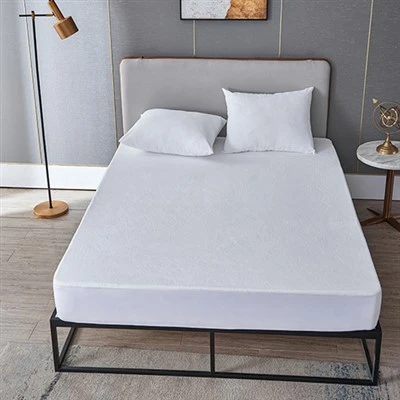
I’ve been in this business long enough to know that bed bug infestations can be stressful, embarrassing, and costly. The last thing anyone wants is to spend thousands of dollars on pest control treatments, or lose a mattress they just bought because of an infestation. That’s why we design our protectors to do more than just keep your bed clean—we design them to give you peace of mind. If you’re a hotel manager looking to protect your guests’ beds, a renter who’s had a bed bug scare before, or just someone who wants an extra layer of defense, we can work with you to find the right size and style for your needs. Whether you’re looking for bulk orders for a property or a single protector for your home, get in touch with our team to discuss your requirements.
Pillow References
- Romero, A., et al. (2007). “Bed Bugs: Resurgence of a Public Health Pest.” Emerging Infectious Diseases.
- Wang, C., et al. (2016). “Efficacy of Mattress Encasements for Bed Bug (Hemiptera: Cimicidae) Management.” Journal of Economic Entomology.
- Petri, J. L., et al. (2020). “Bed Bug Biology and Management: A Review of Recent Advances.” Journal of Environmental Health.
- ASTM International Standard E1762-18, “Standard Practice for Preparation of Carpet and Other Textile Fabrics for Use in Assessment of Resistance to Arthropod Pests.”
Hangzhou Ruiyi Home Products Co., Ltd.
With abundant experience, we are one of the most professional mattress protector manufacturers and suppliers in China. We warmly welcome you to wholesale customized mattress protector at competitive price from our factory. If you have any enquiry about cooperation, please feel free to email us.
Address: BUILDING 1, NO.1757 CHENHUI ROAD, XINTANG STREET ,XIAOSHAN,HANGZHOU, ZHEJIANG,P.R. CHINA
E-mail: vivian-xu@vip.163.com
WebSite: https://www.ryhometextile.com/
